
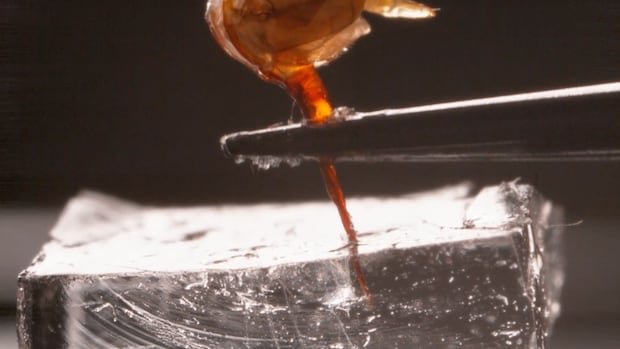

A western honey bee’s stinger is a defense tool used as a last resort, designed to embed itself and deliver venom, often leading to the bee’s demise. Recent research published in the Proceedings of the National Academy of Sciences is shedding light on the effectiveness of this defense mechanism.
Lead author Fiorella Ramirez Esquivel, a postdoctoral researcher at Macquarie University, highlighted the significance of being able to film the bees in action, made possible by modern high-speed cameras. The study utilized cameras capable of capturing hundreds of frames per second to observe the rapid bee stinging process.
Experiments involved live honey bees, with researchers swiftly removing the stinger and studying its mechanics before it became inactive. The study unveiled a double-piston design in the stinger, where specialized valves facilitate both stinger penetration and venom delivery simultaneously.
Juliana Rangel, an apiculture professor at Texas A&M University, expressed fascination with the study’s insights beyond traditional microscope images. The study emphasized the intricate dance of the stinger valves, allowing venom to flow continuously while driving the stinger deeper.
The defense mechanism of the western honey bee, involving autotomy where part of the body is left behind, serves the larger colony’s protection. Honey bee stingers release pheromones to signal other bees to join in defense against threats. Rangel noted that while the defense mechanism may not work on all targets, the barbed stinger enhances the chances of deterring attackers.
The study not only provides a deeper understanding of the honey bee’s stinging process but also raises questions about other honey-producing bees’ defense strategies. The utilization of high-speed videography has unveiled new insights into the complex system of the bee stinger, with potential implications for medical applications.