
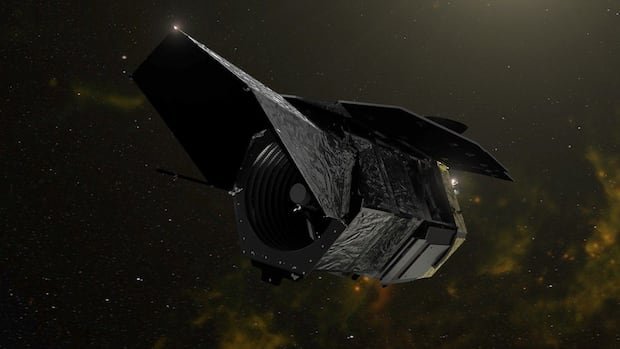

At 7:26 a.m. on Sunday morning, a new space telescope is set to launch from Cape Canaveral, Florida atop a Falcon Heavy rocket, with the aim of uncovering new mysteries of the cosmos. The much-anticipated Nancy Grace Roman Space Telescope, honoring NASA’s inaugural chief astronomer renowned as the “mother of the Hubble Space Telescope,” will embark on a five-year mission, extendable, to orbit 1.5 million kilometers away at the L2 point where gravitational equilibrium maintains satellites in a stable trajectory.
Distinguishing itself from existing orbiting telescopes like the Hubble Space Telescope and the James Webb Space Telescope, the Nancy Grace Roman Space Telescope boasts unique features such as a 2.4-meter mirror akin to Hubble’s, complemented by a coronagraph capable of blocking starlight to unveil planets encircling distant stars. Moreover, its Wide Field Instrument, as sensitive as Hubble’s, can capture images of an area 100 times larger, significantly enhancing observational capabilities.
Equipped to resolve billions of stars, the telescope’s advanced camera facilitates diverse sky and stellar surveys. The Nancy Grace Roman Space Telescope is anticipated to make groundbreaking discoveries, particularly in two key areas.
Firstly, astronomers are eager to utilize the telescope in the quest for exoplanets, striving to unravel the uniqueness of our solar system amidst the plethora of stellar systems. Leveraging methods like the transit technique, where slight dimming of starlight indicates a planet’s passage, the telescope aims to expand current exoplanet knowledge significantly. Additionally, the telescope will employ microlensing, enabling deeper exploration and potentially identifying Earth-like planets.
Secondly, the telescope will delve into the mysteries of dark matter and dark energy, which constitute the majority of the universe’s composition. By scrutinizing galaxies and globular clusters, the mission seeks to pinpoint and quantify dark matter alongside normal matter in millions of galaxies. Simultaneously, it will investigate the elusive dark energy contributing to the universe’s accelerated expansion.
The Nancy Grace Roman Space Telescope promises a revolutionary leap in astronomical research, offering unprecedented insights into the cosmos and paving the way for remarkable scientific advancements.