
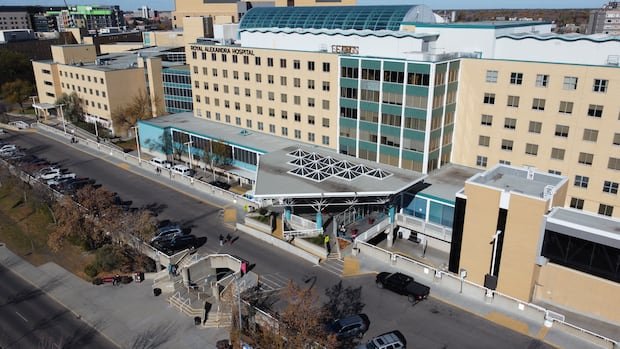

A novel weapons detection system designed to decrease violence in hospital emergency departments is scheduled for a trial run at an Edmonton hospital. The system, if successful, may be implemented in various healthcare facilities across Alberta.
Alberta Health Services issued a request for proposal in October to test the technology in the emergency department of the Royal Alexandra Hospital as part of a two-year pilot project. The initiative has garnered support from healthcare worker associations and unions, who view the introduction of enhanced security measures in Alberta hospitals as a positive development in light of the escalating violence directed at healthcare workers.
According to a survey conducted by the Canadian Federation of Nurses Unions, six out of ten nurses reported encountering violence within a year. A previous report by CFNU indicated a 66% increase in lost-time injuries related to violence among healthcare workers between 2006 and 2015.
Dr. Warren Thirsk, an emergency physician at the Royal Alexandra Hospital and president of the section of emergency physicians for the Alberta Medical Association, highlighted the long-standing issue of violence in emergency departments. He explained that factors like medication, illness, and dementia can lead to patient disorientation and subsequent violent reactions.
Kristi Bland, a spokesperson for Alberta Health Services, mentioned that pending a review, the technology could be permanently implemented in other AHS facilities. The aim is to minimize the entry of weapons into hospital emergency departments, with the Royal Alexandra Hospital selected due to its heightened security requirements.
The Health Sciences Association of Alberta, a union representing frontline healthcare workers, also expressed concerns about the increasing safety issues in hospitals. Incidents of harassment and violence against healthcare workers have been on the rise over the past five years, according to HSAA spokesperson Matt Dykstra.
The proposed weapons detection systems are expected to utilize technologies such as AI and scripts to develop algorithms for detecting specific weapons like knives and firearms. These systems, similar to those in use at other Canadian hospitals, rely on sensors, cameras, and AI programs trained on weapon data sets to differentiate weapons from everyday items.
David Harrigan, director of labour relations with the United Nurses of Alberta, noted the positive impact of similar systems in other hospitals, stressing the importance of enhancing staff safety. Windsor Regional Hospital reported a significant reduction in threats following the installation of a similar system, contributing to improved staff assurance and lower vacancy rates.
Concerns have been raised about the technology’s efficacy due to an increase in false positives. However, proponents like Michael Broderick from Windsor Regional Hospital argue that the system’s margin of error is minimal and prioritize caution in alarm triggers to allow for investigations by security personnel.
The implementation of the weapons detection system at the Royal Alexandra Hospital aims to enhance the current verbal screening process for weapons. The technology is expected to improve the screening efficiency by flagging potential threats before any violent incidents occur, providing a proactive approach to ensuring safety in emergency departments.