
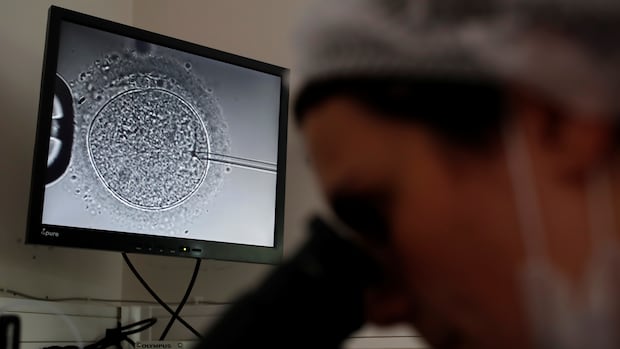

Two years ago, when Emily Fricker from North Bay tied the knot, she and her husband were excited about starting a family. However, after being directed to a fertility clinic in Sudbury, she discovered that the necessary procedure — in vitro fertilization — was not offered there.
“They informed me, ‘We’re unable to provide that service here. You’ll need to go to Toronto for the IVF procedures,’” Fricker shared in a conversation with CBC News.
Since that time, she has traveled multiple times to Sudbury and Toronto, frequently taking unpaid leave from her job as a receptionist.
“We’ve been trying to save money over the past two years. That helps, but when we need to stay overnight, a hotel in North York for three nights is certainly expensive. It definitely adds up. Honestly, it’s been more than I anticipated,” Fricker remarked.

In their pursuit to start a family, Emily Fricker and her husband have incurred nearly $15,000 in expenses and traveled extensively between North Bay, Sudbury, and Toronto. (Submitted by Emily Fricker)
Although Ontario promotes one fully funded IVF cycle per patient, Fricker has already spent close to $15,000 and initiated a GoFundMe campaign to help manage the expenses, as the provincial funding only covers the procedure while excluding medications, testing, and travel costs.
“It felt somewhat misleading,” Fricker stated. “When you dig into the specifics, they provide a list of items that are not covered, and then the costs just keep escalating.”
Her situation illustrates what some residents in northern Ontario perceive as a widening gap in fertility care access.
“It’s a lot to process and manage. It’s not just about money, but also my emotions throughout this roller coaster,” Fricker expressed.
“We’re uncertain if this will succeed, and we’ve already invested so much; I can’t even say if I could afford another attempt after this. I truly don’t know.”
Provincial investment in fertility programs
In October, the province announced a $250 million investment aimed at enhancing the Ontario Fertility Program.
A representative from the Ministry of Health stated in a written communication that this investment will “increase capacity at current clinics and also support 25 additional clinics, including six new IVF facilities.”
This expansion will increase the total number of participating clinics to 54 and is “anticipated to add 5,000 IVF cycles by 2025-26.”
The government claims that the program is “enhancing accessibility to fertility services beyond Toronto.”
The ministry highlighted that 15 of the newly established clinics are situated in other regions, with many offering regional services in Thunder Bay, Sudbury, and Sault Ste. Marie, thereby providing blood tests and cycle monitoring closer to home.
Additionally, the province references its new Ontario Fertility Treatment Tax Credit, which provides up to $5,000 annually to assist with fertility-related expenses.
However, Nickel Belt MPP and NDP Health Critic France Gélinas pointed out that a significant portion of the funding continues to be allocated to private facilities in southern Ontario.
“I received the complete list of clinics receiving new cycles, and the majority are new facilities located in affluent neighborhoods of Toronto. Upon further investigation, I found that most are owned by corporate entities,” she noted.
“Some are part of U.S. conglomerates while we have numerous physician-owned practices throughout Ontario, including in Sudbury in northern Ontario that received zero funding.”
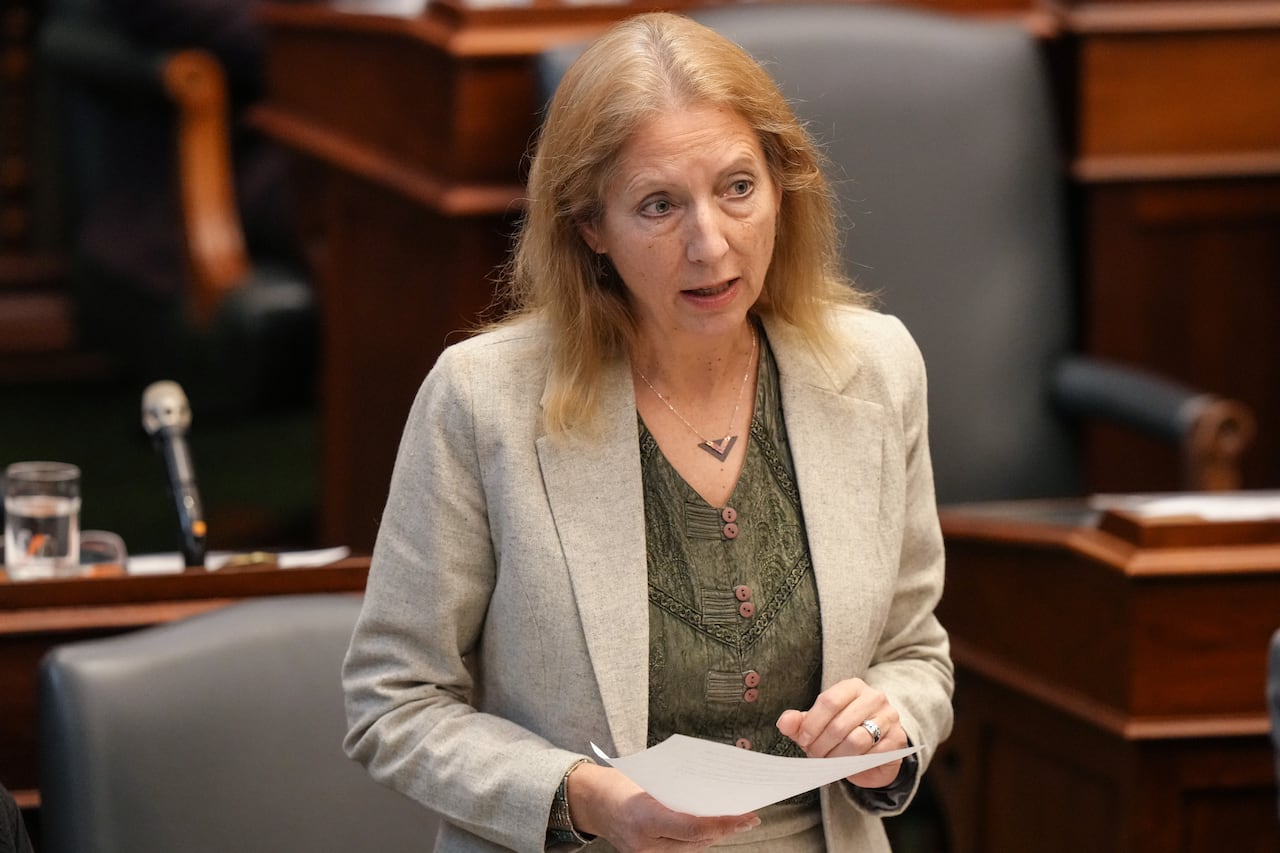
France Gelinas, the NDP health critic and MPP for Nickel Belt, argues that the new funding is primarily directed towards private clinics in southern Ontario, leaving northern patients without a comprehensive fertility clinic. (The Canadian Press/Chris Young)
Geography remains a barrier
Dr. Karen Splinter, an obstetrician-gynecologist at Health Sciences North and co-founder of the Northeastern Ontario Women’s Health Network in Sudbury, stated that the funding has alleviated wait times.
“Six months ago, some clinics had wait times close to two years for a funded cycle, but now access to funded cycles has probably more than doubled at most clinics, resulting in wait lists that are only a few months long at the majority of places,” Splinter explained.
Nonetheless, some patients are still required to travel for essential appointments.
“I have patients journeying from New Liskeard, Timmins, North Bay, Sault Ste. Marie, every day to visit our clinic because we remain the closest option. It would be even more beneficial for them to have access to care for some of their appointments at the nearest lab and ultrasound facilities,” she added.
According to Splinter, the Sudbury clinic can conduct fertility evaluations, blood tests, ultrasounds, and intrauterine inseminations. However, for egg retrievals and embryo transfers — the most technically intricate aspects of IVF — patients are still required to travel south.
“The goal is for eight of those visits to occur locally, with only the final appointment necessitating travel,” Splinter stated.
Both Splinter and Gélinas advocate for the province to invest in enhancing capacity in the north to prevent patients like Fricker from experiencing such financial and emotional burdens.
Currently, Fricker is preparing for another trip later this month, hoping it will bring her closer to achieving motherhood.
“It’s been overwhelming. I remind myself that I must go through this if I want to have a child.”