
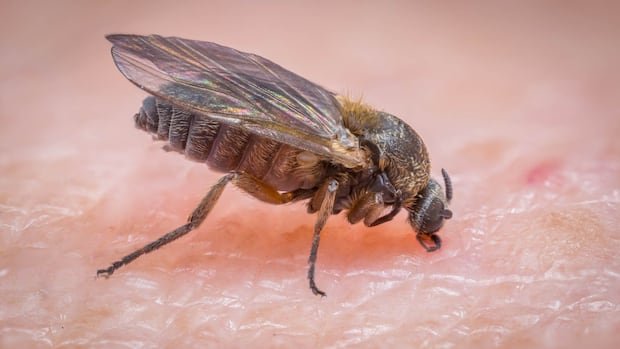

As temperatures rise across Nova Scotia, residents are encountering an increased presence of blackflies compared to previous years. However, this surge in blackfly activity may have a positive aspect, according to Andrew Hebda, a former zoology curator at the Nova Scotia Museum. Hebda explained to CBC’s Information Morning Halifax that blackflies typically remain inactive during the winter and cold spells, only emerging in spring with the onset of warmer weather, which is happening rapidly this season.
Hebda mentioned that a 10-day to two-week period of warm weather allows the majority of blackflies to emerge, reproduce, and then disappear for the rest of the summer, as they have only one generation per year. In contrast, mosquitoes can have up to six generations in a single season. Hebda noted that mosquitoes thrive in moist, warm conditions, unlike blackflies.
Last year’s dry conditions, despite higher temperatures, suppressed blackfly populations, according to Hebda. To avoid blackflies, he advised avoiding tall grass and wooded areas, while for mosquitoes, staying in open areas with strong, steady winds is recommended. Using bug sprays to conceal scent or wearing bug jackets to create a physical barrier against insects are additional preventive measures.
In other news, Nova Scotia is planning an annual offshore wind bidding process, two former Baddeck commissioners are competing in a byelection in Victoria County, a new shelter is set to benefit Bridgewater after the closure of a controversial drop-in center, a judge rejected a Sydney pro boxer’s plea change request in an assault case, and the Alderney ferry service in Halifax is returning to a 15-minute schedule following delays.