
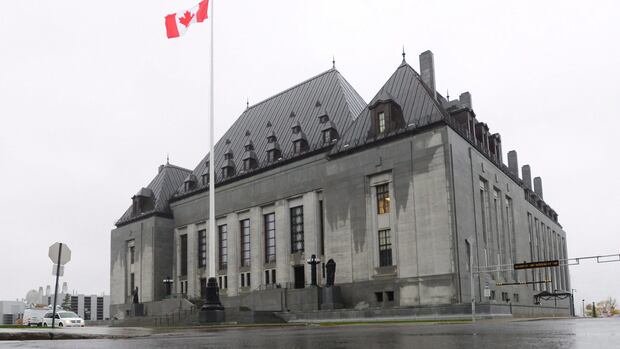

The Supreme Court of Canada has determined that federal inmates have the right to challenge decisions denying their transfer to less secure prisons based on the deprivation of their liberty. In a six-to-three ruling, the court asserted that federal prisoners can utilize the habeas corpus process to contest the restrictive conditions of their incarceration before a judge.
The case involved two federal inmates, Frank Dorsey and Ghassan Salah, who were recommended for transfer from medium- to minimum-security prisons by their case-management teams but were denied by senior correctional officials. Despite their efforts to challenge the rejections in court, both the Ontario Superior Court of Justice and the Court of Appeal for Ontario initially dismissed their applications, stating that habeas corpus was not applicable in their cases.
However, the Supreme Court overturned these lower court decisions, emphasizing that denying an inmate the opportunity to be moved to a lower security facility constitutes an unlawful deprivation of liberty. The ruling highlighted the importance of broad access to habeas corpus for individuals contesting the legality of their confinement without needing to demonstrate entitlement to a less restrictive setting beforehand.
While the decision did not impact Dorsey and Salah, who had already been transferred to minimum-security prisons, it is expected to have significant implications for other federal inmates seeking to challenge security reclassifications and address potential systemic discrimination within the federal prison system. The ruling now allows federal prisoners to seek recourse through superior courts more expeditiously by filing habeas corpus applications for judicial review.
The majority opinion stressed that the ruling does not open the floodgates for mass prisoner transfers, as inmates must present valid reasons for questioning the denial of their transfer requests. The Correctional Service of Canada will also be required to provide more detailed justifications for its decisions in response to the heightened scrutiny resulting from court hearings.
Legal advocates believe that the decision could shed light on disparities faced by Black, Indigenous, and other racialized prisoners, who are disproportionately placed in maximum security facilities upon initial intake and experience delays in transitioning to lower security prisons. The decision may empower advocacy efforts to challenge such disparities and support marginalized prisoners in navigating the justice system more effectively.
The Correctional Service of Canada emphasized its commitment to assessing the risks posed by offenders to determine appropriate security classifications, prioritizing the safety and security of institutions and the public in all decisions related to inmate transfers. The CSC stated that transfers to lower security levels are only approved after careful consideration of public safety factors and indicated that it is reviewing the Supreme Court’s decision while refraining from further commentary at this time.