
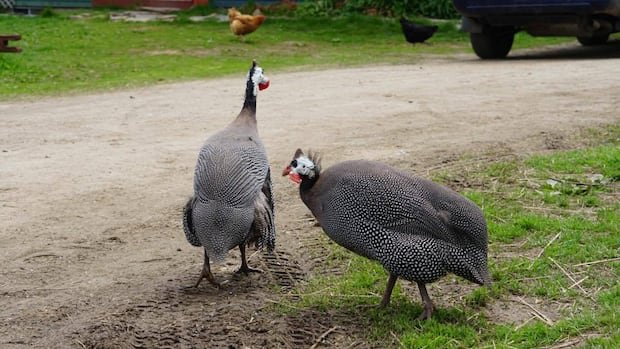

In Canada, the spread of ticks is on the rise, prompting Nova Scotians to seek solutions to protect their properties. One unconventional but effective method gaining popularity is the use of guinea fowl, known for their insect-eating prowess. Heather Squires, a guinea fowl breeder in Lunenburg, Nova Scotia, has seen a surge in demand for these birds, with inquiries doubling this year. To maintain enough birds for tick control on her farm, she had to temporarily suspend sales after selling around 70 baby guinea fowl, known as keets.
Despite Nova Scotia being identified as having the highest tick population in Canada last year, the use of guinea fowl as tick exterminators is not a new concept. Bruce Rathgeber, a professor at Dalhousie University, acknowledges the ongoing debate around the effectiveness of guinea fowl in controlling ticks. While he believes they can be a supplementary measure, he emphasizes that published research favors landscape management techniques like maintaining short grass and clearing wooded areas as more reliable tick control methods.
Breeding guinea fowl comes with challenges due to their loud nature, difficulty in captivity breeding, and questionable intelligence. Owners like Phalen MacLean suggest strategies like providing secure indoor spaces for the birds to learn safety habits. MacLean also notes that guinea fowl have an advantage over chickens in bug control without damaging vegetation. However, prospective owners are advised to consider space requirements and potential hazards like busy roads before acquiring guinea fowl.
In conclusion, while guinea fowl offer a natural approach to tick control, experts recommend a comprehensive strategy that includes proper landscape management alongside the use of these unique birds.