
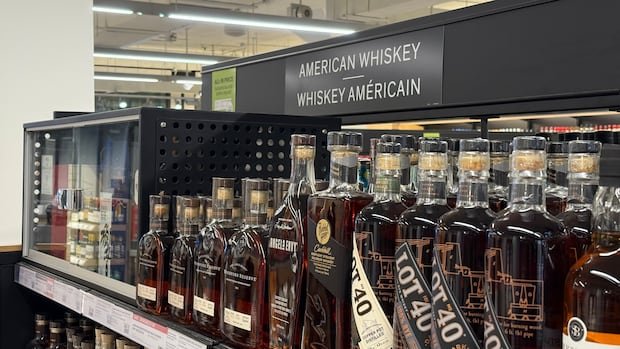

The Ontario government is maintaining a veil of secrecy around its significant stash of American alcohol products, valued at around $79.1 million, which were removed from shelves in response to the Canada-U.S. trade conflict. CBC News had to resort to a freedom-of-information request to the Liquor Control Board of Ontario (LCBO) in August to inquire about the fate, quantity, and disposal plans of the U.S. alcohol products withdrawn in March. However, the LCBO took 64 days to respond, exceeding the legal 30-day limit by 34 days.
Upon the release of the documents, which were heavily redacted across 50 pages, crucial details such as the quantity of inventory at risk of expiration, the amount already disposed of, and the total cost to taxpayers were concealed. This contrasts with the transparency exhibited by liquor authorities in Quebec, New Brunswick, and Nova Scotia, who have disclosed information about their U.S. liquor supplies.
One revelation from the LCBO documents was a projected $2.9 million provision in the 2024-25 financial statements for potentially expiring products. Nonetheless, the underlying data supporting this estimate, critical for public verification or understanding waste scale, was deemed “cabinet confidence.”
Colin Blachar, the director of media for Ontario’s Finance Ministry, mentioned that the U.S.-made alcohol products remain in storage following the government’s directive to remove them due to trade tensions. He assured that minimal product expiration has occurred due to the extended shelf life of most alcohol items.
James Turk, a researcher at Toronto Metropolitan University, criticized the LCBO’s classification of inventory information as “cabinet confidence,” arguing that such routine operational data should not be shielded from public scrutiny. Turk highlighted a broader pattern of secrecy within the provincial government, citing previous instances where transparency was lacking in disclosing governmental information.
Ontario NDP Leader Marit Stiles echoed concerns about the government’s opacity, calling it part of a wider trend of concealing information from the public. CBC News has lodged an appeal with the Information and Privacy Commissioner of Ontario’s Office regarding the redacted internal documents from the LCBO.