
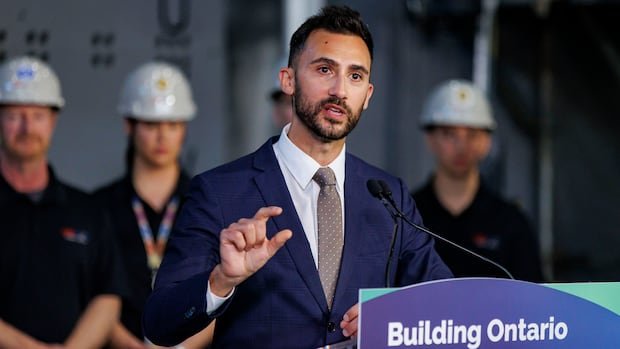

Plans have been unveiled for a comprehensive lithium mining and processing venture in northwestern Ontario, as announced by the provincial minister of energy and mines on Wednesday. Frontier Lithium’s PAK Lithium Project has been fast-tracked under the ‘One Project, One Process’ (1P1P) framework, which aims to expedite permitting approvals and attract global investment.
This initiative, touted as the largest lithium project in Ontario, encompasses a mine, mill, and downstream conversion facility for producing battery-grade lithium chemicals. Despite its progress, the 1P1P policy has faced criticism from various First Nation leaders for lacking meaningful community engagement in the approval process.
Chief Brandon Rae of North Spirit Lake First Nation expressed discontent during a press conference at Queen’s Park, stating that the government and its partners have not adequately involved indigenous communities in the decision-making process. He emphasized the need for respect and fairness in partnerships with First Nations.
The project’s proximity to North Spirit Lake, a fly-in First Nation located around 500 kilometers northwest of Thunder Bay, underlines the significance of indigenous involvement in the development. Minister of Energy and Mines Stephen Lecce emphasized that the Crown’s duty to consult obligation remains intact under the 1P1P framework.
Lecce highlighted that the framework’s primary goal is to reduce bureaucratic hurdles and facilitate efficient project completion. The proposed mine, mill, and conversion facility are slated to be situated 175 kilometers north of Red Lake, aligning closely with a proposed lithium refinery in Thunder Bay.
The initiative aligns with the Ontario government’s strategy to boost self-reliance in the province, moving away from dependency on industry giants like Australia and China. With the increasing global demand for lithium in various applications, including electric vehicle batteries and energy storage systems, the project is expected to play a pivotal role in the region’s economic growth.
Despite facing opposition, the project and planning framework have garnered support from organizations like the Northwestern Ontario Municipal Association (NOMA). Frontier Lithium anticipates creating around 1,000 long-term jobs and generating an estimated $2.4 billion over its operational lifespan.
Chief Brandon Rae emphasized the importance of communities being equal partners in shaping the development process while asserting their rights to consent and protection of traditional lands. Additionally, the province is engaging with stakeholders and Indigenous communities to expedite the development of a new transmission line between Dryden and Red Lake to meet the increased energy demands of projects like PAK Lithium.
The announcement signifies a significant step towards unlocking the region’s metal and mining potential, creating employment opportunities, attracting investments, and fostering economic development in northern Ontario.