
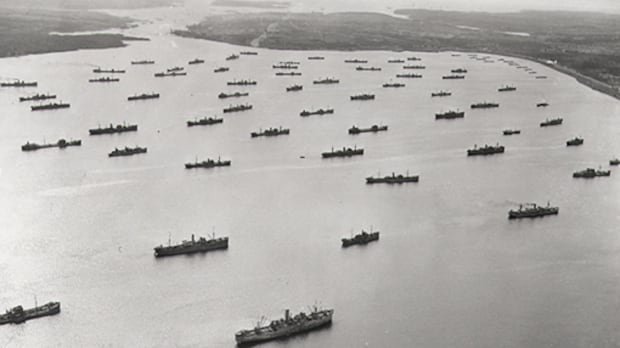

During July 1940, amidst the ongoing conflict in Europe, a British naval ship quietly arrived at Halifax harbor, carrying a shipment initially disguised as fish but actually containing gold and securities. This vessel, known as HMS Emerald, marked the beginning of a series of deliveries transferring Britain’s wealth to safety in Canada as part of Operation Fish, a covert mission crucial for Britain’s success during World War II.
At that time, the Atlantic Ocean had become a perilous zone due to the significant threat posed by Germany’s U-boats, leading to the destruction of numerous Allied ships. Despite the dangers, all Operation Fish vessels successfully reached Halifax that year, bringing an equivalent of over $200 billion in gold and securities through the port, constituting the largest movement of physical wealth in history.
Upon arrival in Halifax, the assets underwent inspection by Bank of Canada officials before being loaded onto Canadian National Express train cars. Accompanied by a substantial security detail, the assets were transported to Montreal and eventually reached the Bank of Canada vaults in Ottawa.
Historian Paul Doerr, a professor at Acadia University, highlighted that Winston Churchill, the newly appointed Prime Minister of Britain, foresaw the need for Commonwealth countries like Canada to continue the war effort. This foresight led to the relocation of the substantial British gold reserves to enable these nations to finance the war, facilitated by the Emergency Powers (Defence) Act of 1939.
Apart from safeguarding the wealth from Nazi threat, the assets were crucial for purchasing American armaments, as the United States was not yet involved in the war. The transfer of wealth to Canada allowed Britain to access and sell assets to meet U.S. requirements for immediate payment in gold or dollars for war materials, sustaining the war effort.
Although the operation depleted Britain’s resources by the year-end of 1940, assistance from President Franklin Roosevelt through the lend-lease arrangement provided vital support. Operation Fish played a pivotal role in buying crucial time for Britain’s survival, with Halifax serving as a vital conduit in securing the war chest that funded the Allied fight against the Nazis, ultimately safeguarding the Allied cause.
This strategic maneuver not only preserved Britain’s economy but potentially saved the entire Allied effort during the war.