
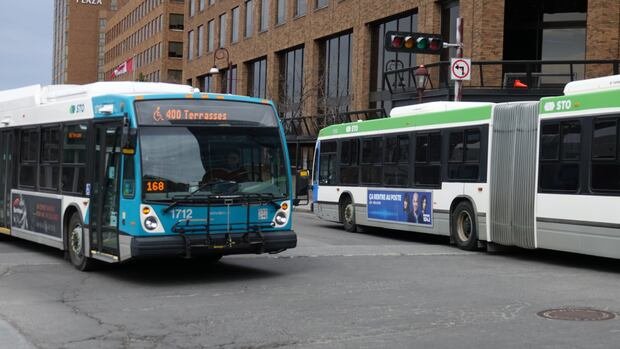

Bus passengers in the National Capital Region are preparing for a potential strike by supervisors at Gatineau’s transit agency, which could disrupt service and create challenges for commuters next week. The labor union representing approximately 50 mechanic supervisors and trainers at the Société de transport de l’Outaouais (STO) has announced plans for a strike on Monday if their demands regarding wages, aligned with OC Transpo pay rates, are not met.
The STO has cautioned that if the supervisors proceed with the strike on Monday, bus operations will cease. Despite ongoing negotiations, the two sides have not reached a resolution, prompting the transit agency to advise users to arrange alternative transportation for the upcoming week.
Concerns have been raised by regular STO riders, such as Esmée Modderman, who rely on bus services for their daily commutes. The potential disruption poses challenges for individuals like Rejéanne Guay, particularly those who may struggle with mobility or lack access to private vehicles.
Local educational institutions, including colleges and high schools in Gatineau, are also monitoring the situation and preparing contingency plans for students. The prospect of a strike has prompted organizations like College Saint-Joseph and the Western Québec School Board to communicate potential impacts to parents and students who depend on STO services.
Federal employees mandated to commute to the office at least three days a week will need to make alternative arrangements in the event of a strike. The Treasury Board Secretariat of Canada has advised employees to discuss options like telecommuting or flexible work schedules with their supervisors.
With the possibility of increased traffic congestion due to the strike, parking availability in the National Capital Region is expected to be limited. Katherine Bellfoy, vice-president of operations and development at Groupe Marc Dubé, which manages around 2,000 parking spaces in Gatineau, suggests arriving early and exercising patience to navigate the potentially heightened demand for parking facilities.