
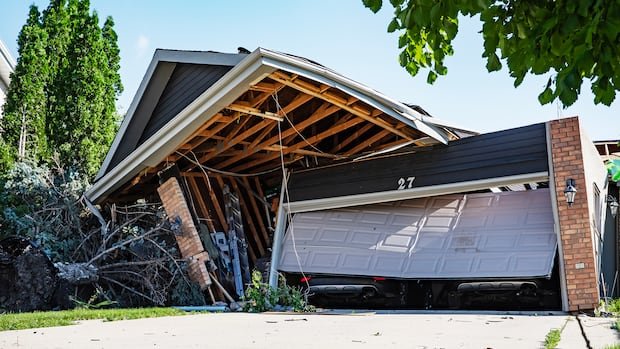

A severe storm hit Winnipeg on Monday night, causing significant damage in the city’s southwest area, including a house that partially collapsed. Experts suspect a small tornado may have touched down, a rare occurrence in urban areas, but further evaluation is needed. John Hanesiak, an atmospheric science professor at the University of Manitoba collaborating with the Northern Tornadoes Project, mentioned that the storm’s linear nature could have spawned the tornado.
The aftermath of the storm included roofs and fences being torn off, barbecues and sheds scattered across yards, trees uprooted, and a metal shelter for shopping carts twisted in a grocery store parking lot. Residents like Cyndi Porcher expressed astonishment at the destruction, likening it to scenes typically seen in the U.S. rather than in their own neighborhood.
While tornadoes are more common in the U.S., occurrences in Canadian Prairie cities are less frequent but possible, as noted by Hanesiak. Fortunately, some residents, like Porcher and Lila Hillman, were spared significant damage to their homes, though debris littered their yards. Hillman described the chaotic scene of the storm hitting just before 10 p.m.
The emotional impact of the event was evident, with Hillman reaching out to homeowners of the collapsed house to deliver the upsetting news. The City of Winnipeg is evaluating the storm’s effects, with reports indicating tree damage as a primary concern, keeping city forestry crews busy.
Meteorologist Brian Proctor highlighted the challenges of determining the storm’s wind strength, noting radar data suggesting gusts exceeding recorded levels. The area experienced intense bursts of wind, potentially from straight-line winds rather than a tornado. Southern Manitoba has faced a series of severe weather events, including a confirmed tornado near Rossburn and heavy rainfall in Brandon and surrounding regions.
Further rainfall warnings have been issued for western Manitoba, with additional heavy rain expected. Despite ongoing severe weather conditions, Proctor anticipates a more stable, drier pattern in the upcoming weekend. The severe-weather season typically extends through June and July, with the potential for severe storms to continue for several more weeks.