
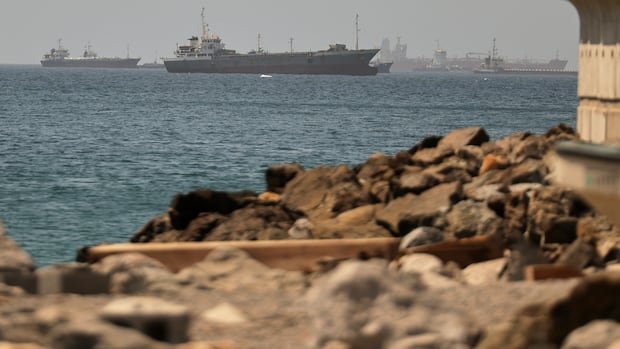

A recent study suggests that the current situation of ships being stuck in the Gulf due to the closure of the Strait of Hormuz could lead to a significant environmental risk known as a “super-spreader” event. The research, published in the journal Biological Invasions, highlights the potential threat posed by various marine organisms, such as algae, barnacles, and tunicates, attaching to stationary vessels in the Persian Gulf and the Gulf of Oman.
Lead author Mario Tamburri from the University of Maryland Center for Environmental Science described the scenario as a perfect setup for a widespread biofouling event, emphasizing the danger of these organisms spreading globally once the ships start moving again. It is estimated that around 1,500 ships are currently stranded in the Persian Gulf, with additional vessels in the Gulf of Oman due to the ongoing closure of the strait amid tensions between the U.S. and Iran.
The accumulation of organisms on ship hulls, known as biofouling, can facilitate the transfer of invasive species to various ports worldwide if not properly managed. The extended period of inactivity for these ships, far beyond the usual duration, coupled with ineffective hull coatings, raises concerns about the potential for a super-spreader situation.
Experts point out that the warm waters and high salinity of the Persian Gulf create favorable conditions for these organisms to thrive and spread. Cleaning the vessels before they depart is deemed challenging, as the current capacity of in-water cleaning services is insufficient to handle the large number of ships within a short timeframe.
While the shipping industry has focused on controlling species transported through ballast water, biofouling has received less attention as a pathway for invasive species. The movement of organisms through biofouling poses a significant ecological threat, as demonstrated by past invasive species incidents like zebra mussels in the Great Lakes.
The study underscores the need for stricter regulations and proactive measures to address biofouling risks, given the potential long-term ecological and economic consequences of invasive species establishment. The situation in the Gulf region serves as a stark reminder of how geopolitical events can have far-reaching environmental impacts beyond their immediate context.
As researchers continue to monitor the situation, the full extent of the ecological risks associated with the stranded ships in the Gulf remains uncertain. The study warns that the ongoing crisis could have lasting implications for global marine ecosystems, emphasizing the importance of proactive measures to mitigate the spread of invasive species in the future.