
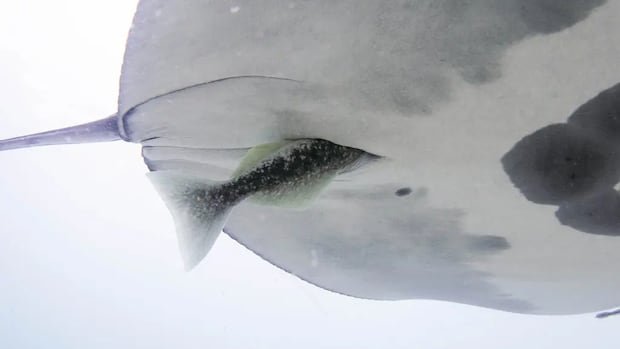

Marine researcher Emily Yeager from the University of Miami revealed in an interview that remoras, also known as suckerfish, are not always the most courteous travel companions. These small fish hitch rides on larger marine animals like sharks, whales, and manta rays, feeding on parasites in exchange for the free ride. However, Yeager’s recent study, published in the journal Ecology and Evolution, indicates a potential downside for manta rays when accompanied by remoras.
The study unveils a behavior termed “cloacal diving,” where remoras dive into the cloaca of their hosts, a multi-purpose orifice for reproduction and waste excretion. While previous observations involved cloacal diving between remoras and whale sharks, the study presents the first documented evidence of this behavior between remoras and manta rays.
Yeager and her team documented seven instances of cloacal diving across various ocean locations over 15 years, suspecting it occurs more frequently than observed. This behavior, often triggered by a fear response in remoras, could potentially harm manta rays due to the sensitivity of their cloaca opening.
Brooke Flammang, a biological sciences professor, suggests that the behavior is likely driven by the remoras seeking a food source, known as coprophagy or eating feces. While the feelings of manta rays regarding this invasion remain unknown, the potential harm caused by remoras could impact the symbiotic or commensal relationship typically perceived between the two species.
As researchers delve deeper into this unique interaction, it challenges the conventional categorization of interspecies relationships, highlighting the complexity and variability inherent in nature’s interactions.