
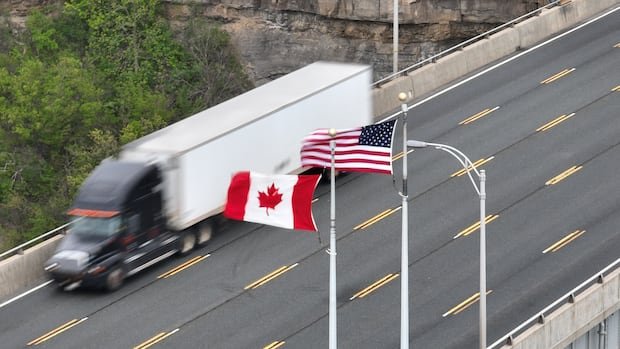

A recent study warns of significant job losses and economic repercussions on both sides of the Canada-U.S. border if the Canada-U.S.-Mexico Agreement (CUSMA) breaks down. The report, commissioned by the Canadian American Business Council and conducted by Oxford Economics, examined the potential outcomes of the ongoing trade negotiations between the two countries.
According to the report, if CUSMA were to collapse, an estimated 214,000 American and 102,000 Canadian jobs would be at risk compared to the current status quo. However, successful renegotiation of CUSMA could lead to the creation of 137,000 jobs in the U.S. and 98,000 jobs in Canada.
The CEO of the Canadian American Business Council, Beth Burke, emphasized the critical importance of the trading relationship between the U.S. and Canada for the prosperity of both nations. The report also forecasts substantial GDP impacts, with the breakdown scenario potentially costing the U.S. economy $1.04 trillion USD and Canada $271 billion CAD by 2035.
In terms of industry impact, the worst-case scenario would disproportionately affect manufacturing sectors in the U.S., particularly in auto, wood product, and metal product manufacturing. Similarly, Quebec and Ontario in Canada would bear the brunt of the fallout if CUSMA were to fail, with manufacturing industries facing significant losses.
Trade representatives are racing against an imminent deadline for new 50% tariffs on a variety of Canadian goods. Efforts are ongoing to strike a deal that would avert these tariffs before the deadline. Canadian Trade Minister Dominic LeBlanc and U.S. Trade Representative Jamieson Greer are engaged in discussions to present a potential trade agreement to President Donald Trump for consideration.
Despite the challenges, negotiations are progressing, with concessions expected from both sides to reach a mutually beneficial agreement. Failure to secure a deal could result in severe impacts on manufacturing sectors, particularly in central Canada. The report underscores the urgency of reaching a resolution to safeguard jobs and economic stability on both sides of the border.