
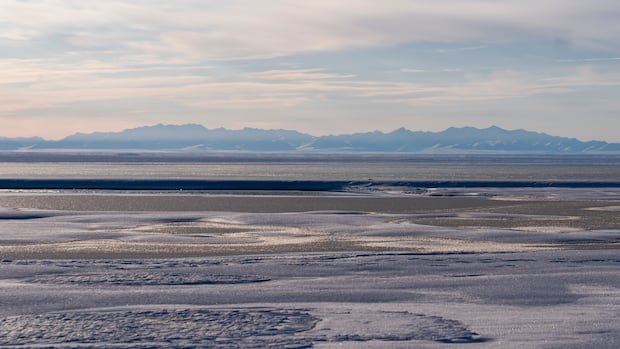

The Trump administration has officially approved the opening of Alaska’s Arctic National Wildlife Refuge’s coastal plain for potential oil and gas drilling. This decision has reignited a longstanding debate about the prospect of drilling in one of the country’s significant environmental areas.
U.S. Interior Secretary Doug Burgum declared the decision, enabling future lease sales within the refuge’s 631,309-hectare coastal plain, a region culturally significant to the Indigenous Gwich’in community. President Donald Trump and congressional Republicans had pledged to allow development in this part of the refuge, as outlined in Trump’s legislation that included tax breaks and spending reductions and mandated at least four lease sales within the area over a decade.
The announcement in Washington, D.C., was made jointly by Burgum, Alaska Republican Governor Mike Dunleavy, and the state’s congressional delegation. The decision also involved the restoration of oil and gas leases in the refuge that were previously canceled by the prior administration, following a court ruling in March that deemed the cancellation unauthorized.
While leaders in the Indigenous Gwich’in communities near the refuge oppose drilling in the coastal plain due to its significance to a caribou herd crucial for their livelihoods, the leaders of Kaktovik, an Inupiaq community within the refuge, support responsible oil development as vital for their economic prosperity.
The administration’s move has drawn mixed reactions, with critics expressing concerns about prioritizing corporate interests over the well-being of communities reliant on the Porcupine caribou herd and the Arctic Refuge’s ecological health. The actions align with Trump’s outlined policies, which also included expediting the construction of a road connecting King Cove and Cold Bay communities, a project aimed at enhancing access to emergency medical services for King Cove residents.
Conservationists have voiced opposition to the road construction, fearing potential impacts on migratory bird habitats, while tribal leaders in various communities have raised concerns about the development’s effects on their traditional subsistence practices. The land exchange deal to facilitate the road’s construction has triggered legal challenges, with environmental groups and tribal leaders planning to contest the decision in court.
Senator Lisa Murkowski, a Republican advocate for land access in King Cove, emphasized the importance of minimal disturbance in building the road to ensure the preservation of the refuge’s essential ecological balance. Murkowski clarified that the proposed road would be gravel, one-lane, noncommercial, and only spanning 11 miles, underscoring the need to balance development with conservation efforts.
In summary, the administration’s decision to open the Arctic National Wildlife Refuge for oil and gas drilling has sparked debates and legal challenges, highlighting the complex balance between economic development and environmental preservation in the region.