
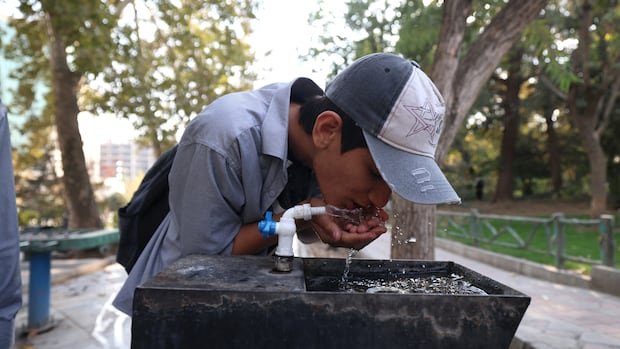

An expert from the UN has stated that evacuating Tehran, Iran’s capital, due to a severe drought is not feasible. Kaveh Madani, the director of the UN University Institute for Water, Environment, and Health, expressed grave concerns about the water crisis in Iran. He emphasized that Tehran is on the brink of running out of water, with only a few days or weeks left before a potential water scarcity crisis.
Iran, with a population exceeding 90 million, is currently grappling with an unprecedented water and energy emergency as reservoir levels plummet to historic lows, endangering both drinking water and electricity supplies. The country is experiencing its sixth consecutive year of drought, leading to approximately 10% of Iran’s dams drying up nationwide.
The scarcity of water has led to restrictions at times, prompting Iran’s President Masoud Pezeshkian to propose the evacuation of Tehran if rain does not arrive by late November. The underlying issues contributing to Iran’s water crisis are not solely due to the lack of rainfall, according to Madani. He attributes the crisis to decades of mismanagement, lack of foresight, and excessive reliance on groundwater resources.
The agricultural sector in Iran, which consumes about 90% of the country’s freshwater, is highlighted as a key issue by Madani. Outdated irrigation practices and inefficient water allocation exacerbate the water crisis, impacting both the agricultural industry and the rural population. Additionally, Iran’s energy system heavily relies on hydropower and fossil fuels, but with diminishing water resources, power production has significantly decreased.
Experts warn that Iran urgently needs rainfall and snow to replenish critical water sources, as the continued depletion of groundwater resources poses long-term challenges. The excessive extraction of groundwater has led to land subsidence in some areas, jeopardizing essential infrastructure like powerlines and dams.
Despite the severity of the crisis, Madani dismisses the idea of evacuating or relocating Tehran residents as impractical. Instead, he suggests implementing short-term measures such as extending weekends and temporarily closing schools and offices to encourage people to leave the city. Long-term solutions require a shift towards a resilience-based water management approach and strategic water allocation.
While some progress has been made in raising awareness about the water crisis, experts express skepticism about substantial policy reforms taking place in the near future. The focus remains on implementing technological solutions rather than costly policy changes that could address the root causes of Iran’s water bankruptcy problem.