
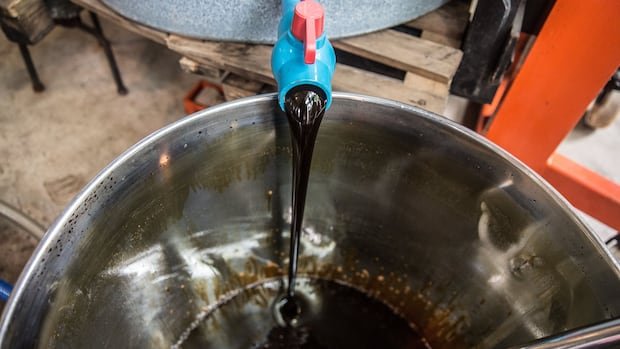

A recent prohibition on Canadian molasses imports by the United States has reignited concerns of sugar smuggling and a corporate clash involving a significant refinery in Hamilton, Ontario. Amidst ongoing trade tensions between the two countries during President Donald Trump’s second term, various disputes over dairy, automobiles, and alcohol have become commonplace. However, the unexpected announcement of a ban on molasses imports alongside restrictions on motorcycles, certain alcoholic beverages, and dairy products has left many puzzled.
This ban, set to be enforced on September 29, follows efforts by American sugar producers to urge the U.S. government to impose higher tariffs on foreign sugar items, citing unfair competition from cheaper alternatives from abroad. Allegations have surfaced against Canadian refineries, accusing them of importing blends of raw sugar, molasses, and water while passing them off as pure molasses to evade sugar tariffs and quotas.
Sugaright, a division of CSC Sugar based in Connecticut, highlighted the urgency of curtailing the influx of diluted Canadian molasses during discussions at the International Sweetener Symposium in Vail, Colorado. The U.S. sugar industry, supported by federal authorities, aims to halt this practice completely.
The controversy traces back to a case in the 1990s involving a Michigan company, Heartland By-Products, which mixed molasses with sugar and water in an Ontario facility to sidestep tariffs. Despite the legality of the scheme at the time, pressure from the sugar sector led to the company’s closure in the 2000s.
Sucro Can Sourcing, led by Don Hill, has been at the center of recent accusations. Hill has refuted claims of impropriety, emphasizing the legitimate nature of their molasses exports to the U.S. While the U.S. Customs and Border Protection sanctioned Sucro’s molasses imports in 2020, subsequent scrutiny by the USDA raised concerns of potential tariff circumvention, prompting calls for stricter controls.
Sucro has vehemently contested the USDA’s findings, citing inaccuracies and urging a retraction of the report. Despite halting molasses exports to the U.S. following the completion of a new refinery in Hamilton, the company continues to operate in the Canadian market.
The American Sugar Alliance, a prominent trade association representing U.S. sugar producers, expressed support for the molasses import ban, praising the Trump administration for safeguarding trade laws and American interests. However, questions remain unanswered regarding allegations against Sucro and the motivations behind the ban.
David Singerman, a history professor, highlighted the historical context of sugar industry practices, including smuggling and tariff manipulation. The lobby’s influence, he noted, grants sugar a unique status, shaping trade policies and protections for domestic producers.
In response to the ban, experts like Drew Fagan from the University of Toronto emphasized the parallels between U.S. sugar protectionism and Canada’s dairy industry challenges. He suggested multiple factors could be influencing the molasses ban, including its role in alcohol production and dairy feed.
Despite these complexities, the rationale behind the molasses import ban remains unclear, underscoring the broader implications of trade disputes and industry pressures.