
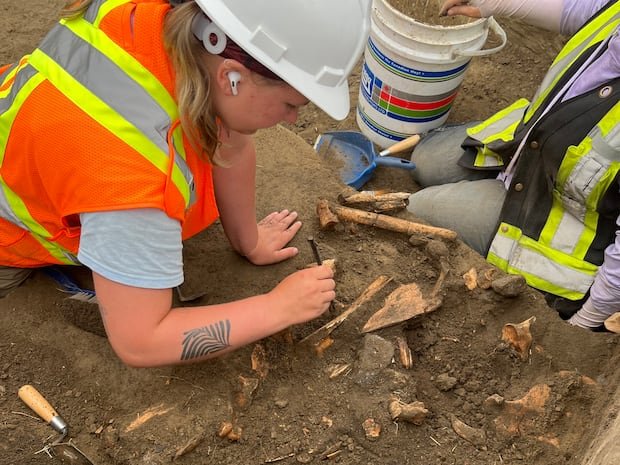

Around 240,000 artifacts discovered at a historical site in Moose Jaw, Saskatchewan, are shedding light on the deep-rooted human history in the Wakamow Valley. Presentations by archaeologists unveiled the latest findings at the Moose Jaw library recently.
Bill Strongarm, a member of the Touchwood Agency Tribal Council and a senator with the Federation of Sovereign Indigenous Nations, expressed satisfaction at the excavation of the site and the artifacts. He emphasized the sacred significance of the location, which was a traditional camping area for the Saulteaux and Assiniboine peoples en route to the Cypress Hills in southwest Saskatchewan. Strongarm speculated that these tribes likely utilized the site for water, food resupply, and even temporary winter stays.
These artifacts signify just a fraction of the tales that warrant further exploration into Indigenous history. Strongarm envisions the establishment of a heritage center to safeguard the area for future generations. With the unearthing of these artifacts, he anticipates a broader narrative about how Indigenous communities adapted to their surroundings.
Alan Korejbo, a senior archaeologist at Respect Heritage Consulting, revealed that the excavation was prompted by pending highway construction near the site. The artifacts discovered span both pre- and post-European contact periods, indicating human activity in the region for over 12,000 years. The turnout at the library presentation impressed Korejbo, emphasizing the community’s keen interest in the excavation.
The array of artifacts includes stone and bone tools like projectile points, scrapers, awls, and knives, some of which were crafted from bison bones. Noteworthy findings at the site include evidence of plants and pottery, with pottery origins initially presumed to be from Missouri but later traced to areas in southern Manitoba, Ontario, and Minnesota.
Analysis of plant residue on the artifacts unveiled traces of wild rice, beans, corn, and squash, suggesting a mix of cultivation and foraging practices. This unique discovery raises questions about food cultivation practices and trade routes in the region. The artifacts have been transferred to the Royal Saskatchewan Museum for further analysis, enhancing understanding of this significant site.
The discoveries at the Wakamow Valley site underscore the enduring presence of Indigenous communities in the region, a fact that Strongarm takes great pride in. The artifacts serve as a testament to the longevity of Indigenous heritage on the continent.