
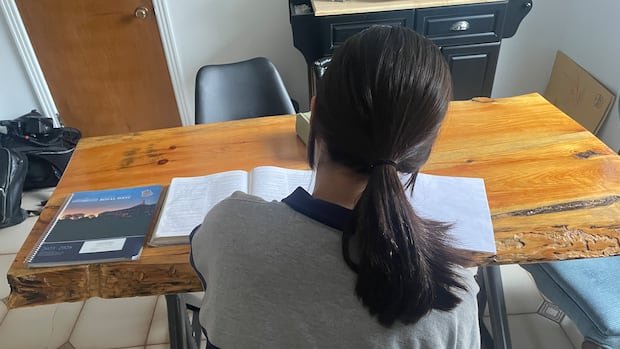

A student at a Montreal high school claims she faced an unjust suspension for denouncing Israel on her personal Instagram account. The public school, Royal West Academy, accused her of making “offensive/inappropriate” comments about another country in a letter to her mother. The controversy stemmed from two statements she made recently, expressing outrage at Israel’s actions and sharing a conspiracy theory related to Hamas attacks on October 7.
The student clarified that her criticism was directed at a corrupt government rather than individuals or groups. She mentioned posting a message expressing anger towards Israel following airstrikes in Gaza. Despite a ceasefire agreement earlier in October, both sides have blamed each other for violations. The student’s use of strong language prompted school officials to reprimand her for creating a negative environment.
The school proposed a six-hour suspension on a pedagogical day, but the student refused to comply, citing it as an infringement on her freedom of speech. Her parents have lodged a complaint with the English Montreal School Board. The board defended the suspension, citing concerns of bullying and violence due to the impact of the student’s posts on others at the school.
A debate has ensued over whether the school’s actions impede freedom of expression or combat bullying. While the school insists on the disciplinary measure as a learning opportunity, critics argue that punishing political views sets a dangerous precedent. The student’s mother emphasized the importance of media literacy and critical thinking in interpreting social media content accurately.
The student, known for her pro-Palestinian activism, feels unfairly targeted for expressing her political beliefs. She believes her posts criticizing Israel have been singled out unjustly, noting that criticism of other governments does not face the same repercussions. The situation has sparked discussions on free speech, political expression, and the boundaries of school discipline.