

In the dead of night, Abhishek Nautiyal and his family received a urgent call from a family acquaintance, instructing them to vacate their residence in Joshimath, a quaint Himalayan town in Uttarakhand, India. The warning was succinct: evacuate immediately. The town was experiencing sinking due to water saturation, causing structural damage to over 800 homes, including Nautiyal’s abode. Consequently, the family had to relocate to a temporary dwelling for six months as per government directives issued in early January 2023.
The land subsidence in Joshimath during late 2022 and early 2023 was rapid, with a significant drop of 5.4 centimeters observed in just 12 days. This phenomenon resulted in fissures appearing in streets, sidewalks, homes, a local temple, and two adjacent hotels, which ultimately collapsed and leaned against each other before being razed. Additionally, the town’s gondola was halted due to cracks found in one of its towers.
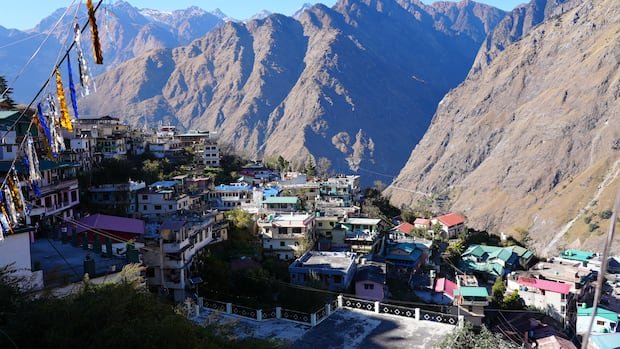
Joshimath, home to around 20,000 residents, sits at an elevation of 1,874 meters on a steep mountain side in the Indian Himalayas. The town’s sinking woes are exacerbated by its location on unstable soil formed from a receding glacier and an ancient landslide, making it susceptible to sinking as the population grows.
Experts have long cautioned against extensive construction projects in the region, given its susceptibility to earthquakes and inadequate water drainage systems, further heightening the risk of collapses in Joshimath. The escalating impact of climate change in the Himalayas, where temperatures are rising rapidly, has accelerated the retreat of glaciers, posing a threat to mountain villages.
The majority of Himalayan glaciers have receded significantly in recent decades, increasing the danger of glacial lake outbursts and flash floods. These climatic shifts have led to catastrophic events like the deadly flash flood in Chamoli district in February 2021, which claimed numerous lives and destroyed infrastructure.
The ongoing major construction activities near Joshimath, aimed at accommodating millions of pilgrims visiting the area annually, have been blamed for exacerbating the town’s sinking dilemma. Environmental activists criticize these projects, particularly the Tapovan Vishnugad hydropower venture, for contributing to the town’s land subsidence.
Despite warnings dating back to 1976 highlighting the unsuitability of Joshimath for urban development, construction projects have continued unabated, leading to the current predicament. The mounting pressure on the town’s infrastructure has left many residents, including Nautiyal and his family, in a state of uncertainty, as their homes bear the ominous red X mark indicating structural unsoundness.
As the community grapples with the looming threat of further sinking, residents like Sundriyal, living in marked houses, dread the uncertainty ahead. The delicate balance between accommodating pilgrims and safeguarding the environment remains a crucial issue for the region, with experts advocating for stringent monitoring of construction projects and public disclosure of their impacts to mitigate future disasters.