
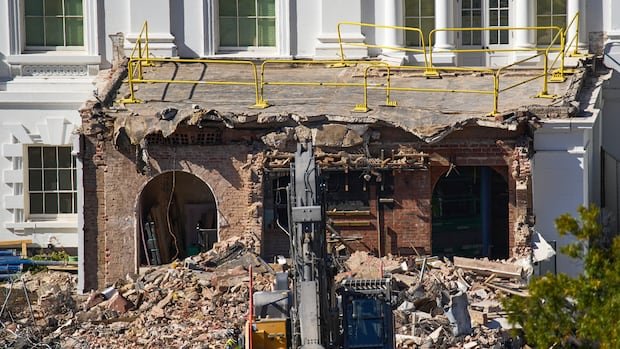

The Democratic party has pledged to look into the process by which President Donald Trump and his administration have pushed through the demolition of a significant portion of the White House, a move that has quickly progressed as citizens have mourned the loss of the East Wing on various social media platforms.
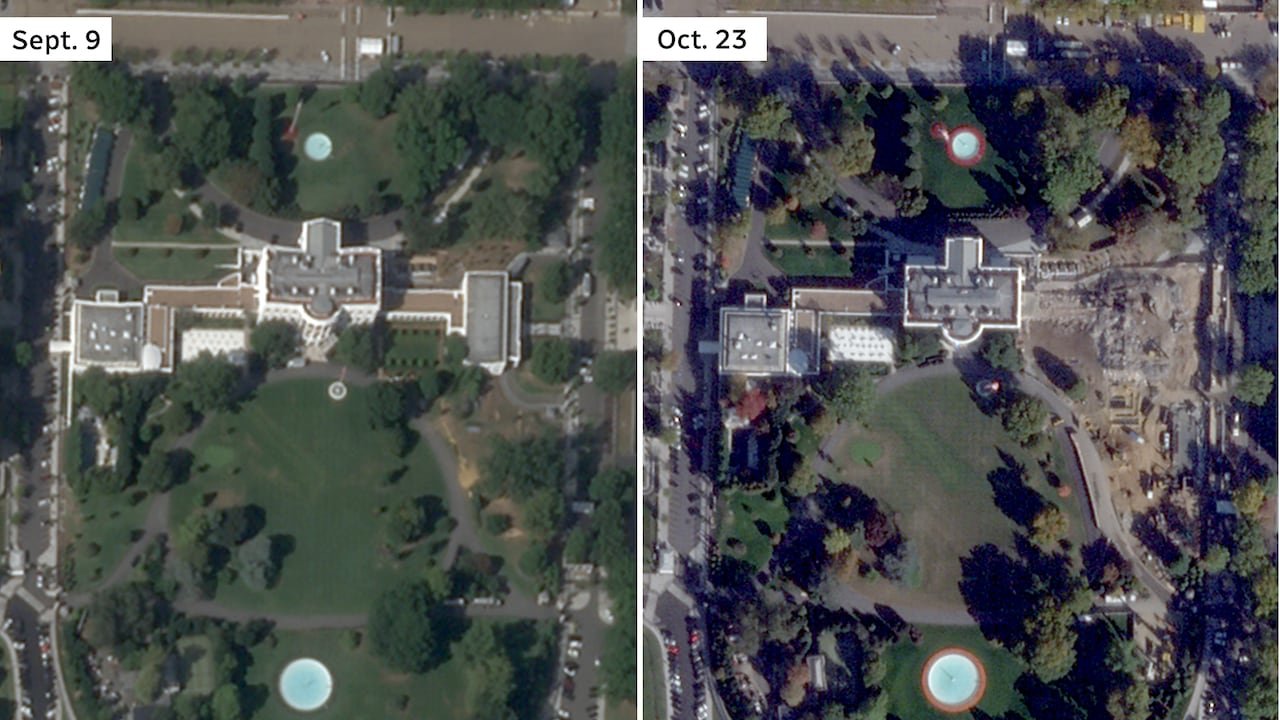
The East Wing was virtually dismantled by Thursday, just three days after construction work commenced.
Originally constructed over a century ago during President Teddy Roosevelt’s term, the East Wing has historically housed the first lady and served as the main entry point for public tours and official functions such as state dinners.
Simultaneously, the White House divulged a list of donors who are financing the construction of a new ballroom on the premises, assuring that the project will not burden taxpayers. Nonetheless, critics argue that accepting donations from private entities poses its own challenges.
“Donald Trump has been engaged in what is arguably the most extensive pay-for-play operation in the nation’s history since the beginning of his presidency, likely seeking contributions from individuals with vested interests before the U.S. government,” remarked Democratic House leader Hakeem Jeffries in an interview with MSNBC this week.
Jeffries assured that the Democrats will demand transparency and probe the circumstances surrounding the demolition, acknowledging that their capabilities are restricted in the currently Republican-led House until the midterm elections next year.
Major Tech companies lead the donor list
While the specific donation amounts remain undisclosed, the White House released a roster of contributors on Thursday, including tech giants such as Amazon, Apple, Meta, and Alphabet, alongside foundations and long-time Trump allies.
As per a CBS News report, donors have the option to provide a lump sum or distribute their contributions over three installments until 2027.
“Lockheed Martin appreciates the chance to contribute to the realization of the President’s vision and the addition of a ballroom to the People’s House, symbolizing the American ideals we strive to protect every day,” a spokesperson from the defense contractor stated.
Carrier, a refrigeration and ventilation company, expressed its pride earlier in the week in supplying the new iconic White House ballroom with an energy-efficient HVAC system.
These donations come amidst Trump’s second term, during which his administration has pressured law firms, media outlets, educational institutions, and others for concessions, apologies, or specific actions on preferred policy matters. The administration has also acquired stakes in multiple companies, deviating from traditional conservative Republican norms.
Although the current contracts or transactions these companies have with the federal government are uncertain, a report by Syracuse.com highlighted that Micron Technology, a donor for the ballroom, was already set to receive federal tax incentives and grants for a new manufacturing facility in upstate New York.
Shifting statements and financial data
The proposed 90,000 square-foot ballroom represents the most significant structural alteration to the Executive Mansion in almost eight decades, about half the size of the intended ballroom.
During discussions about the ballroom project in July, both Trump and White House press secretary Karoline Leavitt maintained that it would not necessitate a complete teardown.
Additionally, the estimated cost has escalated in Trump’s recent statements, fluctuating from $200 million to $250 million to $300 million, coinciding with the ballroom’s evolution from a stated 650-seat facility in July to a nearly 1,000-seat capacity at present.
- <a class="similarLink" href="https://www.cbc