
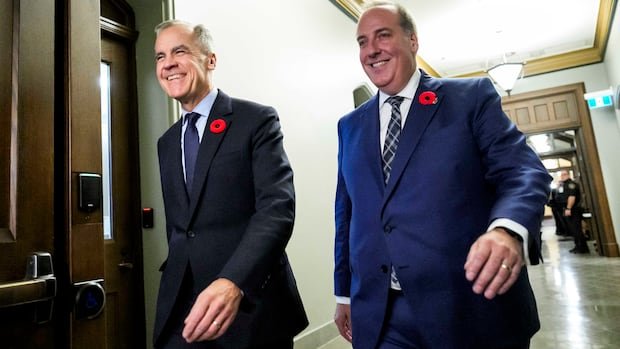

Pierre Poilievre, in an attempt to shift focus from his leadership challenges, urged journalists to pay equal attention to Liberal MP Nathaniel Erskine-Smith’s recent criticisms of the federal government’s budget. Erskine-Smith, known for his independent views, jokingly likened the budget to a Progressive Conservative one, suggesting a departure from typical Liberal policies. The budget, while not aligning with Poilievre’s preferences, diverges from traditional Liberal initiatives but retains key social programs like the Canada Child Benefit and federal child care funding.
The budget introduces several changes, including the removal of the luxury tax on yachts and private planes, a shift towards supporting liquefied natural gas (LNG) development, and the repeal of the consumer carbon tax. It also aims to reduce spending by shrinking the public service by 40,000 positions and cutting $44 billion in spending over four years. Despite these shifts, some Trudeau-era policies like the industrial carbon price and certain regulations are retained.
The budget reflects a nuanced approach that combines elements of both Liberal and Progressive Conservative ideologies. While it signals a departure from traditional Liberal policies, such as the consumer carbon tax, it maintains a balance by preserving key social programs and initiatives. The budget’s emphasis on economic fundamentals and productivity aligns with Carney’s vision for the country, indicating a potential shift in federal politics since the last PC budget in 1993. The government’s response to climate change and housing affordability will be critical in shaping its credibility and support among Canadians.