
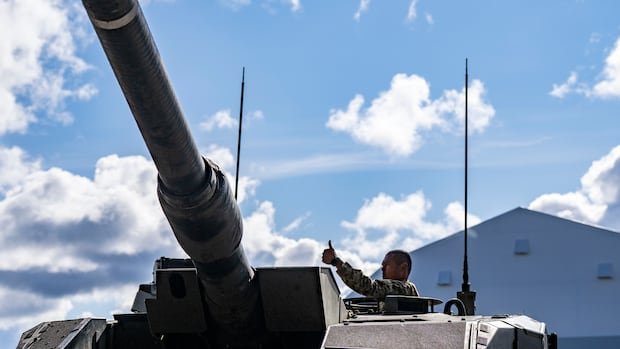

Witnessing the ongoing public discourse surrounding fighter jets and submarines this autumn has been akin to observing heated debates in team sports like baseball or hockey. The fervor is especially palpable online, where enthusiasts passionately dissect the features and nuances of each aircraft and vessel akin to supporting professional sports franchises.
Supporters of the F-35 and Gripen aircraft models exhibit unwavering allegiance. Similarly, the debate between the South Korean KS-III submarine and Germany’s Type 12CD, while slightly subdued, still garners fervent attention. Amidst the clamor over technical details and discussions on job creation and economic advantages, critical queries on national security and industrial policy have remained unanswered by the federal government so far.
The key issues facing the country, set to invest $81.8 billion in military rebuilding and defense industry revitalization, boil down to two fundamental questions: What are the specific expectations for the Canadian military in an arguably more perilous global landscape? And which essential military assets should be domestically manufactured to secure our sovereignty?
While the federal government contends that the Trudeau-era defense policy (Our North, Strong and Free) addresses the former question, the impending defense industrial strategy is expected to tackle the latter. Nevertheless, Ottawa has a history of lofty policies with good intentions that struggle to materialize due to lack of political will or financial constraints, particularly evident in defense matters post-Cold War.
Policy discussions have often neglected a strategic examination of Canada’s global positioning, desired actions, sovereignty protection needs, and the necessary means to achieve these objectives. Notably, the Trudeau government’s 2017 peacekeeping reboot initiative faltered due to insufficient political and fiscal backing.
Wesley Wark, a prominent national security expert, criticizes the absence of long-term strategic foresight at the federal level. Many in the defense and foreign policy circles remain fixated on the fiscal and political confines of the post-Cold War era, which is undeniably outdated. Wark emphasizes the need for a paradigm shift towards comprehensive defense planning, especially in safeguarding and defending the Arctic region.
The ongoing deliberations on a mixed fighter jet fleet and the feasibility of domestic production of fighter jets and submarines in Canada underscore the broader industrial policy discourse. Defence Minister David McGuinty is currently focused on finalizing deals with established submarine manufacturers from Germany and South Korea, emphasizing the urgent need for submarines and the complexity of establishing domestic submarine-building capabilities.
While there are differing opinions on the necessity of a submarine-construction capacity in Canada, discussions on ensuring sovereign industrial capabilities are imperative. Collaborative approaches like the one proposed by TKMS to partner with Canadian shipyards for submarine construction mirror successful models adopted by countries like South Korea to enhance domestic defense industries.
Canada’s historical achievements during the Second World War in rapidly ramping up military production underscore the country’s capacity for large-scale industrial endeavors in times of need, setting a precedent for strategic defense planning and capability development.
The evolving geopolitical landscape and emerging security challenges necessitate a shift towards forward-thinking defense strategies and industrial policies to safeguard Canadian interests effectively.