
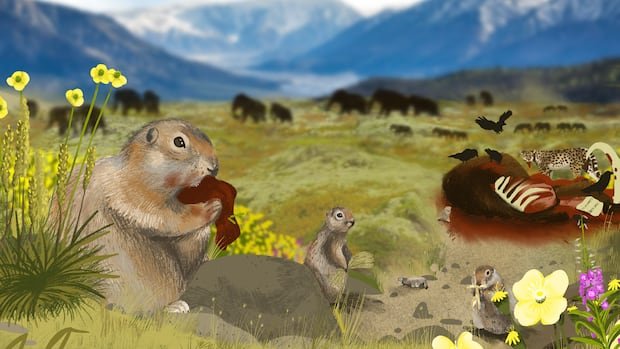

In a recent study published in Nature Communications, researchers have successfully reconstructed the genomes of various ancient creatures that inhabited the grasslands of the Canadian Arctic during the last ice age. By analyzing DNA extracted from frozen squirrel feces found in the Yukon, scientists were able to piece together the genetic profiles of woolly mammoths, horses, steppe bison, and ground squirrels.
Tyler Murchie, a scientist at the Hakai Institute and the lead author of the study, highlighted the comprehensive insight into the ancient ecosystem obtained from the preserved DNA. The coprolites contained genetic material from a wide array of animals such as wolves, predatory cats, mammoths, horses, birds, bats, grasshoppers, and parasitic worms, along with 200 plant species ranging from sages to sedges.
Ground squirrels in the Arctic region have inadvertently served as archivists by creating burrows that preserve a wealth of information about the past. These burrows, which include special toilet chambers filled with ancient feces, have been eroding along river valleys, revealing a treasure trove of fragments dating back 30,000 to 700,000 years. The preserved material includes remnants of plants, bones, and insects collected by the squirrels.
The study also uncovered surprising details about the dietary habits of ancient squirrels. Analysis of the fecal material showed traces of mammoth and horse DNA, indicating that these rodents had a varied diet that included not only nuts and seeds but also scavenged carcasses and even feces of other animals.
One of the remarkable findings of the research was the superior preservation of DNA in the coprolites compared to bones and sediments. By matching the DNA fragments in the feces to known sequences, researchers were able to reconstruct entire genomes and gain insights into the genetic diversity of past squirrel populations.
The study’s results shed light on the stability of plant and animal species in the mammoth steppe grasslands of eastern Beringia over a span of 700,000 years during the Pleistocene epoch. This ecosystem was distinctly different from the present-day boreal forest environment in the region, as evidenced by the DNA analysis of ancient coprolites and modern snowshoe hare feces.
As climate change accelerates the thawing of permafrost in the Arctic, the window of opportunity to study these ancient ecosystems is rapidly closing. The researchers emphasize the importance of understanding how past ecosystems responded to climatic shifts in predicting the future fate of Arctic wildlife.
Overall, the study provides valuable insights into the evolutionary history and ecological dynamics of the Arctic region, showcasing the significance of unconventional sources like ancient squirrel droppings in unraveling the mysteries of the past.