
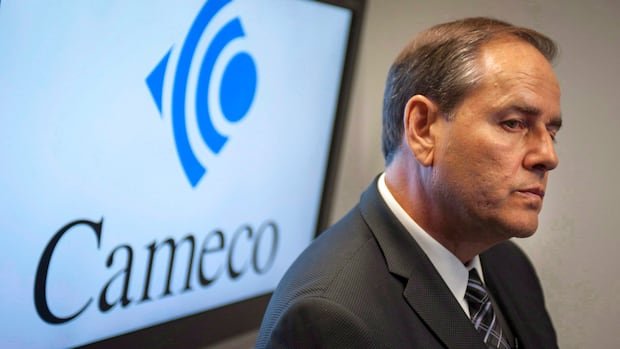

The CEO of Cameco Corp, a Saskatchewan-based company, clarified that the U.S. government’s involvement in a recent nuclear reactor deal does not extend to its primary uranium mining business. The deal, valued at over $80 billion US, involves the U.S. government providing financing and assisting with permits and approvals for new nuclear reactors. These reactors, utilizing technology from Westinghouse – jointly owned by Cameco and Brookfield Asset Management, are set to be constructed south of the border.
During a conference call discussing third-quarter results, CEO Tim Gitzel emphasized that the U.S. government’s partnership interest is solely focused on the Westinghouse business and does not impact Cameco’s core operations. Chief Operating Officer Grant Isaac described the U.S. government’s role as a catalyst in advancing power development to enhance domestic energy security.
Isaac mentioned various potential scenarios for the U.S. government’s involvement, such as financing plants owned by other entities, leading independent projects, or collaborating with utilities. The goal is to introduce 24-hour carbon-free electricity to the market swiftly to meet onshore and artificial intelligence data center demands.
Westinghouse’s AP1000 pressurized water reactor, considered one of the most advanced nuclear power plants available commercially, is anticipated to be the model constructed under the agreement. Isaac also mentioned the possibility of spinning off Westinghouse as a separate entity, with the U.S. as a significant shareholder.
Cameco recently increased its annual dividend to 24 cents and reported a net loss for the quarter ended Sept. 30, with revenues totaling $614.6 million. Adjusted earnings per diluted share for the quarter were seven cents, up from six cents in the previous year.