
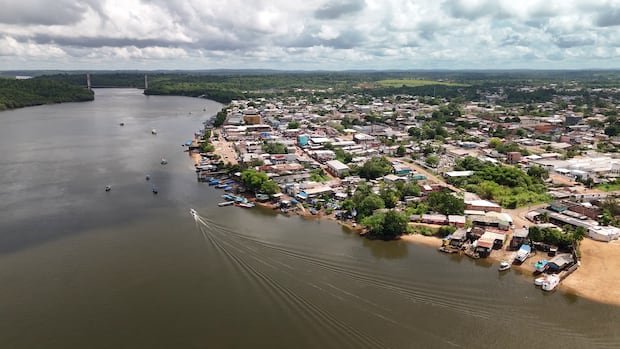

At a river dock in Oiapoque, a city on Brazil’s northern coast, Cleidiney Ribeiro guides his boat into the water. Expressing hope for progress in Oiapoque, he navigates towards the point where the river meets the Atlantic Ocean.
Brazil’s state-owned oil company, Petrobras, has initiated exploratory drilling 170 kilometers off the Amazonian coast coinciding with Brazil hosting COP30, the world’s largest climate conference in Belém. Despite President Luiz Inácio Lula da Silva’s declaration that the Earth can no longer sustain a development model reliant on fossil fuels, the government is on the brink of a potential oil boom in the Foz do Amazonas basin, located 500 kilometers from the Amazon River’s mouth.
Suely Araújo, a public policy coordinator at Brazil’s Climate Observatory, deems the decision to ramp up oil production amidst the climate crisis as highly problematic. Brazil, already ranking as the eighth-largest oil producer, faces criticism for this move.
President Lula emphasizes the need for an energy transition at COP30, where tens of thousands of delegates and observers convene in Belém. The conference aims to spur action on reducing planet-warming fossil fuel emissions and accelerating the shift towards sustainable energy sources.
In Oiapoque, anticipation runs high for potential oil discoveries that could transform the economically disadvantaged region. Local residents, including Romeu Costa, who manages the Oiapoque airport, see the oil industry as a catalyst for city development and economic growth.
Petrobras holds the rights to Block 59 for exploratory drilling, with plans to confirm the extent of deep oil reserves. Additionally, the government auctioned 19 oil blocks in the Foz do Amazonas basin to companies like Exxon Mobil, Chevron, and a Chinese consortium, sparking hopes for job creation and poverty alleviation.
The potential oil deposits in Brazil’s equatorial margin are estimated to be substantial, with the ANP suggesting up to 30 billion barrels of recoverable oil. Despite the economic prospects, concerns loom over the environmental impact and the implications for indigenous communities living along the Amazon’s tributaries.
Indigenous tribes, like those near Oiapoque, express apprehension over the lack of consultation regarding oil drilling licenses, fearing environmental degradation and loss of control over their lands. Indigenous leaders are gearing up for protests at COP30 to draw attention to their opposition to the oil exploration.
As debates continue on the balance between economic development and environmental preservation, the challenge remains to navigate the complexities of Brazil’s oil industry expansion while addressing global climate concerns. President Lula’s leadership during COP30 will be pivotal in addressing these pressing issues.