

The U.S. military reported the 20th strike on a vessel suspected of drug trafficking in the Caribbean Sea resulting in the deaths of four individuals. This action is part of the Trump administration’s intensified efforts in South American waters.
According to a recent social media post by U.S. Southern Command, the most recent strike occurred on Monday, marking a total of 80 fatalities since the operations commenced in September. The Mexican Navy ended its search for a survivor after a strike in late October that lasted four days.
Southern Command’s post displayed a boat speeding on water before being engulfed in flames, confirming that the vessel was engaged in illegal narcotics smuggling along a known trafficking route and carrying narcotics.
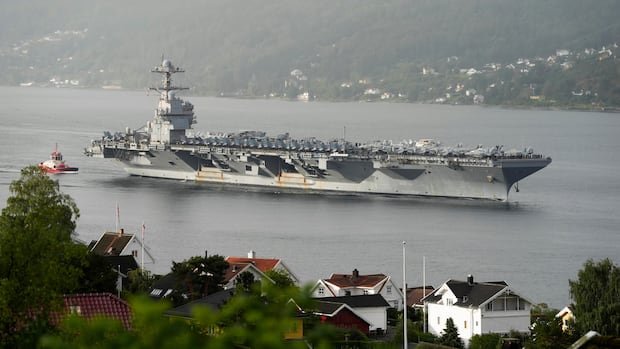
The Trump administration is increasing the U.S. military presence in the region by deploying the USS Gerald R. Ford aircraft carrier, the country’s most advanced warship. This carrier is expected to arrive soon after traveling from the Mediterranean Sea.
The mission has been officially named Operation Southern Spear by Defense Secretary Pete Hegseth, underscoring the growing importance and permanence of the military presence in the area. Once the USS Gerald R. Ford arrives, the operation will involve nearly a dozen U.S. navy ships and approximately 12,000 sailors and marines.
The administration asserts that the buildup of warships aims to halt drug flow into the U.S., although no evidence has been provided to substantiate the claims that those killed in the vessels were “narcoterrorists.”
The strikes have primarily targeted vessels in the Caribbean Sea and the eastern Pacific Ocean, where a significant amount of cocaine from major producers is transported.
Some experts view the aircraft carrier as a strategic tool of intimidation against Venezuelan President Nicolás Maduro, who is accused of narcoterrorism in the U.S. Disagreements exist among experts regarding the possibility of American warplanes bombing land targets to pressure Maduro to resign.
U.S. Secretary of State Marco Rubio has stated that the U.S. does not recognize Maduro as Venezuela’s leader and has criticized the government as a drug trafficking facilitator cooperating with drug traffickers.
Lawmakers, including Republicans, have demanded more information on the targets and the legal basis for the strikes. Rubio and Hegseth met with a bipartisan group of lawmakers overseeing national security matters to discuss the legal rationale and strategy behind the strikes.
Senate Republicans recently rejected a proposal that would have restricted Trump’s authority to launch an attack on Venezuela without congressional approval.