
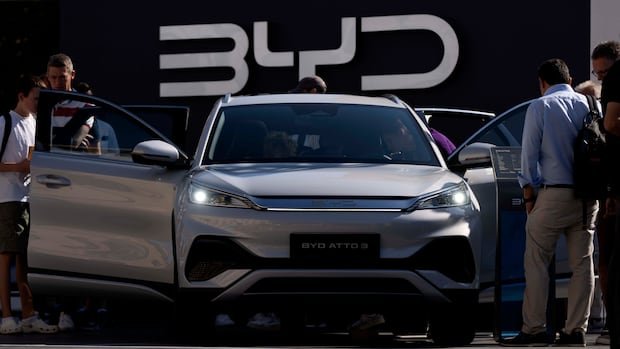

Canada is considering collaborating with Chinese firms in the next three years to develop a Canadian electric vehicle utilizing Chinese expertise, as per a high-ranking Canadian official. The objective is for Canada to lead North America in producing such electric vehicles.
The official emphasized that it would be a mistake to assume that U.S. President Donald Trump would block Chinese electric vehicles from entering the United States. Canada informed the Trump administration in advance of its decision to reduce tariffs on up to 49,000 Chinese electric vehicles annually to 6.1%, down from the 100% tariff imposed in 2024.
Canada’s ambassador to the U.S., Kirsten Hillman, was briefed on the discussions with Beijing. After a meeting between Prime Minister Mark Carney and Chinese President Xi Jinping, Hillman ensured that U.S. Trade Representative Jamieson Greer was informed. The U.S. response was reportedly neutral.
The U.S. was not caught off guard by Canada’s actions, according to the official. Trump supported Carney’s decision to pursue a trade deal with China. However, other officials in Washington expressed concerns. Greer labeled the deal as “problematic for Canada,” citing the need for tariffs to safeguard American autoworkers and consumers from Chinese vehicles.
U.S. Transportation Secretary Sean Duffy opined that Canada might regret allowing Chinese cars into the market. The Canadian government is developing an auto policy set for release in February, aiming to bolster the country’s auto industry workforce of 125,000 and potentially outpace the U.S.
Trump has emphasized that the U.S. does not rely on Canadian-made cars and has imposed tariffs on Canadian-manufactured passenger vehicles. He has encouraged automakers to relocate operations to the U.S. Last month, Industry Minister Mélanie Joly announced plans to serve Stellantis with a notice of default under funding contracts related to projects in Ontario.
The government intends to offer preferential treatment to foreign automakers producing vehicles in Canada over those importing cars assembled elsewhere. Carney highlighted that the deal with China would make certain electric vehicles more accessible to Canadians, representing a small fraction of the domestic market at around three percent.