
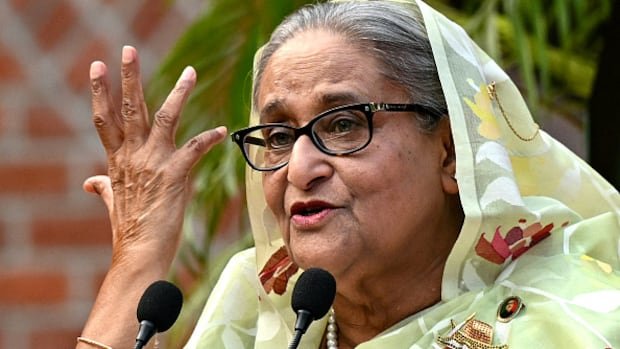

The ousted Prime Minister of Bangladesh, Sheikh Hasina, has been sentenced to death by a war crimes court for her involvement in a deadly crackdown on a student-led uprising. The verdict, delivered by the International Crimes Tribunal in Dhaka, comes ahead of parliamentary elections scheduled for early February, with Hasina’s party, the Awami League, already barred from participating.
Hasina, who is currently in exile in India, received a life sentence for crimes against humanity and a death sentence for her role in the killing of multiple individuals during the uprising. The court’s decision has raised concerns about potential unrest leading up to the elections.
Following the verdict, Hasina criticized the tribunal, describing it as biased and politically motivated. She accused the interim government of orchestrating a rigged trial to eliminate her as a political threat.
Background of the Case
During the trial, prosecutors presented evidence of Hasina’s direct involvement in ordering the use of lethal force to suppress the protests in 2024. The demonstrations resulted in a significant number of casualties, with reports indicating up to 1,400 people killed and thousands injured, making it the deadliest violence in Bangladesh since the country’s independence war in 1971.
Hasina’s defense counsel maintained her innocence, labeling the charges against her as baseless. Despite her claims of a predetermined guilty verdict, the interim government defended the transparency of the tribunal’s proceedings.
Security measures have been heightened in anticipation of potential unrest following the verdict. The country has already witnessed several incidents of violence, including bomb explosions and vehicle torching, though no casualties have been reported.
Political Turmoil and Economic Challenges
Since Hasina’s departure, Bangladesh has been governed by an interim administration led by Nobel laureate Muhammad Yunus. The country, however, continues to face political uncertainty, with concerns over stability persisting.
Hasina’s tenure as prime minister was marked by allegations of authoritarianism, including the suppression of political opponents and human rights abuses. Critics accused her government of establishing de facto one-party rule under the Awami League.
Despite her administration’s economic achievements, Bangladesh has encountered challenges, exacerbated by external factors such as the global economic downturn. The country sought a bailout from the IMF following economic strains caused by rising fuel and food prices.
Hasina’s fall from power culminated in her exile after widespread protests led to her resignation. The events underscore the turbulent political landscape in Bangladesh and the uncertainty surrounding the upcoming elections.