
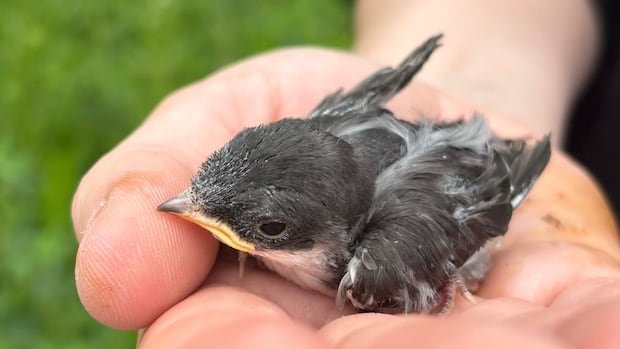

Long Point Bird Observatory, situated on a 40-kilometre sandspit by Lake Erie in southwestern Ontario, is a UNESCO Biosphere Reserve and the oldest continuously operational bird sanctuary in North America. Recent research from the Proceedings of the National Academy of Sciences reveals concerning impacts of climate change on the local wildlife.
The study, conducted by researchers from the University of Michigan and Birds Canada using data from Long Point Bird Observatory, shows a decline in tree swallows’ egg production and body size since 1969. Aerial insectivores like tree swallows have decreased by 43%, with insect numbers dropping by over 60% since 1977.
Lead author Charlotte Probst, a PhD student at the University of Michigan, highlighted the importance of tree swallows as a species that is easy to study due to their nesting behavior. The study found a phenological mismatch caused by climate change, where insects emerge earlier than before, creating a disconnect with the birds’ breeding and migration patterns.
Insect biomass measurements by PhD candidate Hadil Elsayed at Long Point indicate that insects are emerging earlier due to rising temperatures. Changes in vegetation landscape and climate change have led to declines in both terrestrial and aquatic insects, impacting the entire food chain.
To address local insect declines, experts recommend planting native wildflowers, reducing pesticide and herbicide use, and preserving habitats for insects and birds. By understanding the interconnectedness of ecosystems, efforts to support insect populations can benefit tree swallows and other wildlife in the area.