
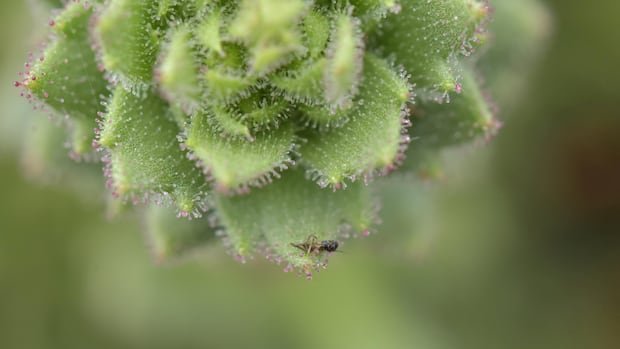

Botanist Douglas Soltis shared in an interview that scientists have confirmed Charles Darwin’s suspicion from over a century ago that a seemingly harmless flowering plant is actually carnivorous. The plant in question, Saxifraga candelabrum, found in the rocky mountain crevices of southwestern China, lures and traps insects using its sticky hairs.
A recent study, published in Nature Communications, validates Darwin’s initial theories about carnivorous plants within the Saxifraga genus, dating back 151 years. These plants, including the researched species, possess tiny sticky hairs that attract insects with their sweet scent, leading to entrapment.
Darwin’s observations of insects stuck on European Saxifraga plants in 1875 sparked interest in carnivorous plant behavior, although he lacked the means to prove their predatory nature. The modern study, utilizing radioactively labeled substances and laboratory analysis, demonstrated the plant’s ability to digest and absorb insect materials for nutrition.
The findings suggest an evolutionary advantage for Saxifraga candelabrum, as nutrient-starved mountain plants benefit from consuming insects rich in nitrogen. These carnivorous adaptations likely originated as a defense mechanism against seed-eating insects, eventually evolving into a source of essential nutrients for the plants.
Researchers speculate that more hidden carnivorous plants, possibly within the Saxifraga genus, could exist. The discovery aligns with previous findings of similar carnivorous behaviors in plant species, indicating a broader prevalence of predatory plants awaiting further exploration.
Carnivorous plants, with over 630 known species globally, exhibit diverse predatory mechanisms, from Venus flytraps’ snap-trap leaves to pitcher plants’ fluid-filled traps. Some plants, like those found in Ontario, even consume larger prey such as salamanders.
The remarkable adaptations of carnivorous plants have captivated scientific interest, echoing Darwin’s fascination with their unique strategies for acquiring nutrients. Soltis emphasized the ingenuity of plants in leveraging insect capture for essential resources, highlighting the intriguing dynamics of plant predation.