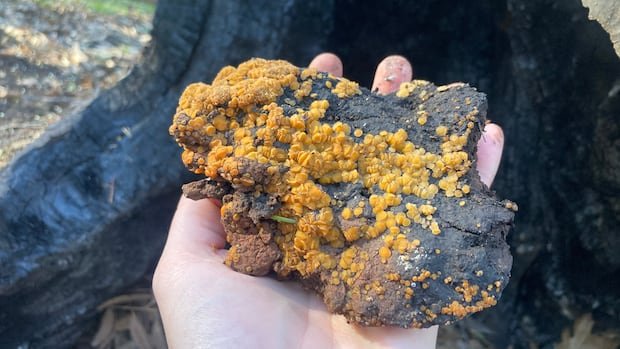


Shortly after a wildfire, a vivid orange layer covers deadwood and the burnt forest floor, creating a surreal scene that appears to still emit smoke.
However, rather than signaling ongoing devastation, this phenomenon indicates a new beginning: tiny fungi are taking over the aftermath.
“They release spores in such abundance that it resembles smoke,” explained Joey Tanney, a mycologist and research scientist at the Canadian Forest Service.
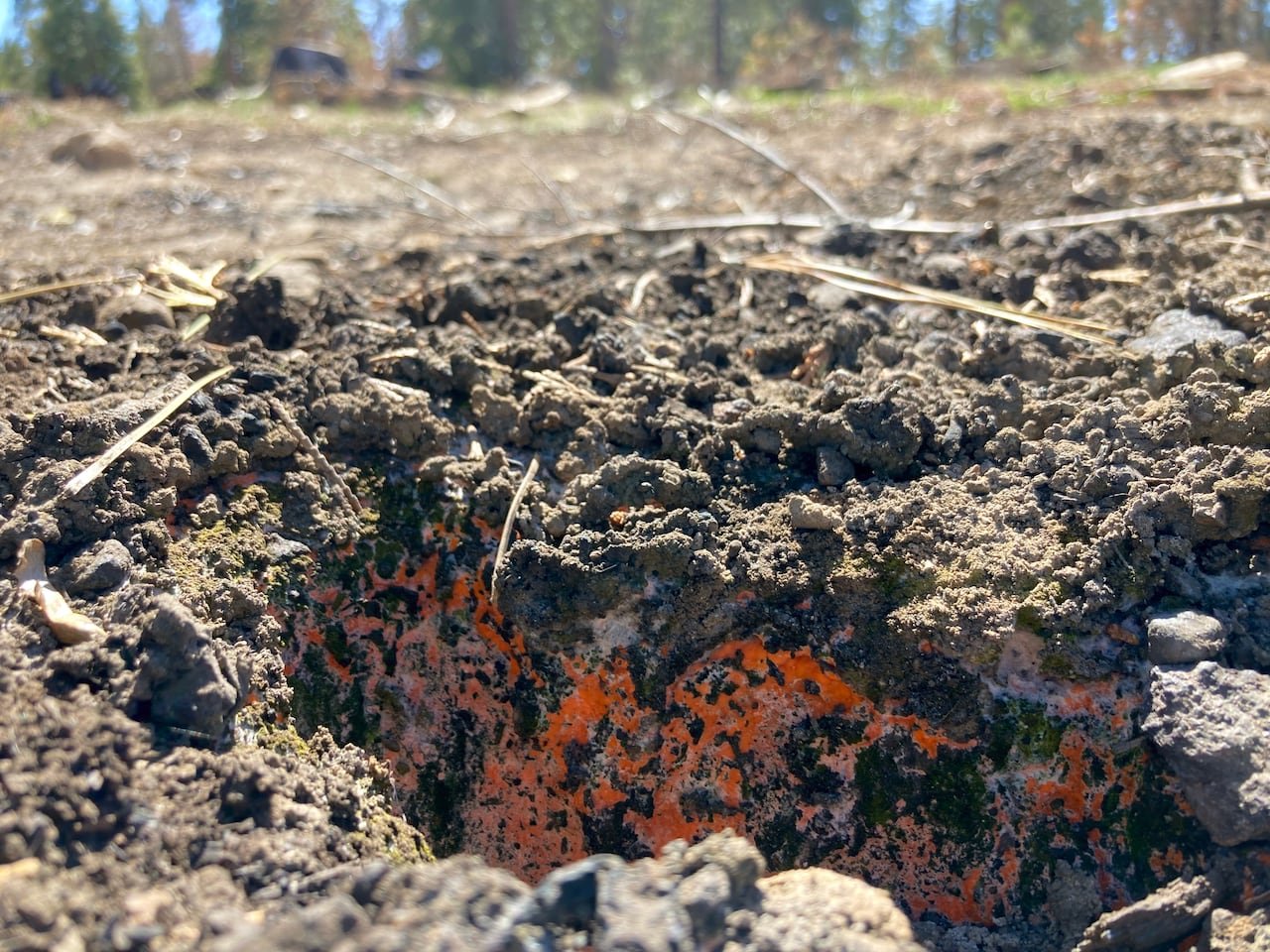
These peachy-orange fungi, known as pyronema, belong to a group of pyrophilous fungi, which thrive in fire-affected areas and serve as nature’s initial responders to wildfires. With the escalation of wildfire frequency, intensity, and size due to climate change, the study of how these organisms aid in fire recovery has gained importance.
Pyrophilous fungal spores, believed to be dormant, stay inactive until a wildfire occurs, according to Monika Fischer, a mycologist at the University of British Columbia (UBC) researching the role of fungi in post-fire environments. Historically, most wildfires were ignited by lightning strikes, and the survivors, such as pyrophilous fungi, are those that have adapted.
The past three years have witnessed unprecedented wildfire seasons, surpassing the average annual burn size of 2.7 million hectares, as indicated in the Senate report released recently. In 2023, a record-breaking 14.7 million hectares were ravaged by fires.
“Given these extraordinary fire seasons, comprehending the post-fire environment — encompassing soils, fungi, and various organisms — becomes increasingly crucial,” Tanney emphasized. “What is the normative aftermath of a fire, and how does it compare to the aftermath of severe fires?”
Survival Mechanism of Fungi
The soil shields these organisms from extreme surface heat, which can reach up to 1,000 degrees Celsius. Fischer recorded temperatures of 70 degrees Celsius just three centimeters below the surface during a slash pile burn, a controlled fire type conducted in clearcut areas in California to reduce wildfire risks, for her research.
“They await the heat to trigger their reaction,” Fischer described the behavior of pyrophilous fungi, noting a significant rise in fungal populations in soil samples taken shortly after the fire.