

Welcome to our weekly newsletter focusing on environmental trends and solutions driving us towards a more sustainable world. I’m Emily, intrigued by floating solar technology and excited to share Canadian researchers’ innovative ice-resistant floating solar design.
This week’s highlights include Canadian researchers developing buoyant floating solar systems for icy lakes, the issue of bike parking during major events, and the potential for cities to recycle heat from data centers.
Floating solar panels are gaining global traction, offering clean energy generation without using land space. While popular in other countries like Japan, France, and Paraguay, they are still rare in Canada due to challenges posed by winter conditions.
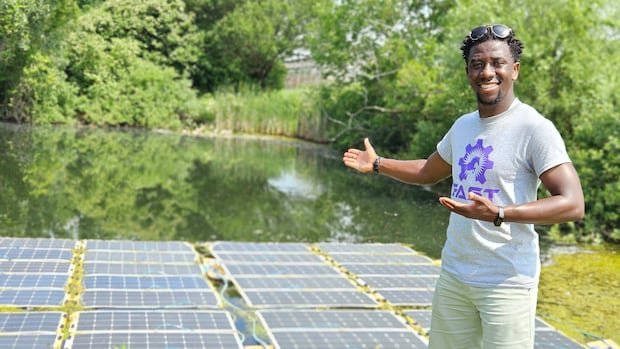
Researchers at Western University in Ontario, led by Koami Soulemane Hayibo, designed a floating solar system to prevent ice formation. By using inexpensive plastic foam and bubblers to circulate warmer water, they successfully tested the system on a pond, ensuring continuous electricity generation.
Although the bubblers consume some electricity, the overall efficiency of floating solar panels remains high due to the cooling effect of water. The estimated cost of electricity generation is comparable to other solar installations in Canada, showing promise for further development and optimization.
The potential applications of this technology are vast, including repurposing former mine sites or hydro facilities, reducing water loss in reservoirs, and even in backyard pools. Ibrahim Dincer, a professor at Ontario Tech University, praised the innovation’s versatility and potential for clean energy solutions.
Companies offering floating solar arrays in cold climates are exploring various solutions, such as maintaining a gap between panels and ice surfaces. The use of solar-powered aerators beneath panels has also shown benefits in aquaculture and water quality improvement.
As communities grapple with managing data center developments, concerns arise about the heat they generate. However, experts suggest that with proper management, this waste heat could be harnessed as a valuable resource for heating buildings and water, offering a sustainable solution to energy demands.
In summary, the advancements in floating solar technology and heat recycling from data centers showcase innovative approaches towards sustainable energy solutions, paving the way for a greener future.
For more insightful updates on environmental initiatives and solutions, stay tuned for our next newsletter.
Thank you for reading. If you have any questions, feedback, or story tips, please reach out to us at whatonearth@cbc.ca.
– Emily Chung