
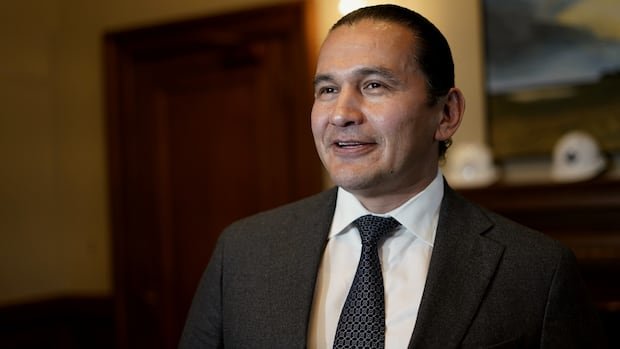

Manitoba Premier Wab Kinew sparked controversy on Monday by criticizing a recent Supreme Court of Canada decision regarding child pornography sentencing and advocating for harsher punishment for offenders. Kinew expressed strong disapproval, stating that those involved in the distribution of child sexual abuse material should not only face lengthy imprisonment but also be integrated into the general prison population without protective custody.
The Supreme Court of Canada had recently ruled the mandatory minimum one-year jail sentences for individuals found guilty of accessing or possessing child pornography as unconstitutional. This decision, reached by a narrow 5-4 margin, emphasized the importance of judicial discretion in sentencing beyond incarceration in appropriate circumstances.
Several conservative figures, including Opposition Leader Pierre Poilievre, Alberta Premier Danielle Smith, and Ontario Premier Doug Ford, have called for the federal government to override the court ruling using the notwithstanding clause, which allows governments to bypass certain sections of the Charter of Rights and Freedoms.
Kinew, a member of the New Democratic Party, aligned himself with Smith, Ford, and others who criticized the court ruling, describing it as “disgusting” and using derogatory language to refer to sex offenders. His comments were met with criticism from the Criminal Defence Lawyers Association of Manitoba, who deemed his remarks unhelpful and urged caution and restraint in his public statements.
Furthermore, the association condemned Kinew for insinuating support for vigilante justice, emphasizing that the legal system is designed to ensure fair treatment for all individuals and deliver just sentences based on various considerations. This is not the first time Kinew has faced backlash for his comments on the justice system, as he previously issued an apology for remarks made during the expulsion of a fellow NDP member.
In a separate legislative move, Kinew introduced a bill requiring judicial review whenever the Manitoba government invokes the notwithstanding clause to overrule Charter rights. This bill aims to ensure that judges provide an opinion on the constitutionality of such actions, although they would not have the authority to prevent the government from proceeding.
Notably, Kinew criticized the use of the notwithstanding clause by governments in Quebec, Alberta, and Saskatchewan, accusing them of infringing on the rights of vulnerable individuals. These provinces had invoked the clause for various controversial laws, such as restricting name changes for minors without parental consent and ordering striking teachers back to work.
Overall, Kinew’s stance on the Supreme Court ruling and his proposed legislative changes have sparked debate and criticism, highlighting ongoing discussions around judicial discretion, constitutional rights, and the role of elected officials in shaping legal frameworks.