

Sudan’s Rapid Support Forces (RSF) have accepted a proposal from the United States and Arab nations for a humanitarian ceasefire and are willing to engage in discussions regarding a halt to hostilities, according to a statement released on Thursday. Previous ceasefire attempts between the RSF and Sudanese army have not been successful during their 2½-year-long conflict. The U.S. administration, under President Donald Trump, has expressed its efforts to bring an end to the fighting in Sudan.
The recent development follows the capture of El Fasher, a city in Darfur that has been besieged for over 18 months, by the RSF. This city served as the last military stronghold in the western region of Darfur. The Sudanese army has not yet responded to the announcement.
The RSF expressed readiness to implement the agreement and start immediate discussions on the logistics of a ceasefire and the core principles guiding the political process in Sudan. The Security and Defense Council, led by the army, convened earlier this week but did not provide a definitive response to the proposal, with influential figures and allies within the army expressing dissent.
A military official from Sudan, speaking anonymously to The Associated Press, stated that the army is open to the proposal but will only agree to a truce if the RSF completely withdraws from civilian areas and relinquishes weapons as outlined in previous peace initiatives.
Massad Boulos, a U.S. adviser on African affairs, mentioned ongoing collaborative efforts between the U.S., the Sudanese army, and the RSF to establish a humanitarian ceasefire. He anticipated a forthcoming announcement, indicating that the plan orchestrated by the U.S. involves a three-month humanitarian truce followed by a nine-month political process.
The conflict between the RSF and the military originated in 2023 due to escalating tensions between the once allied factions tasked with overseeing a democratic transition following a 2019 uprising. The World Health Organization (WHO) reports that the ongoing war has claimed the lives of at least 40,000 individuals and displaced 12 million people. However, humanitarian organizations suggest the actual death toll could be significantly higher. Over 24 million individuals are currently grappling with severe food insecurity, as per the World Food Program.
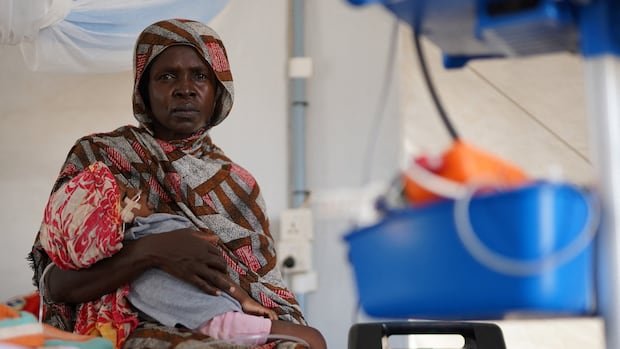
Sudan has been characterized by humanitarian agencies as facing a severe displacement crisis. Recent events in El Fasher, where the RSF took control after a series of attacks, led to further displacement and atrocities, including the killing and abduction of civilians.
The RSF has been accused of executing civilians and unarmed combatants during and after the capture of El Fasher, with international concern mounting over these actions. Witnesses and reports from the UN human rights office indicate potential war crimes committed during the takeover.
Islamic Relief issued a warning highlighting the risk of collapse faced by community kitchens supporting many families in Sudan due to food shortages. A recent survey by the organization revealed that 83% of families in east and west Sudan are currently experiencing food scarcity.
El-Fasher and Kadugli have been identified as famine-stricken areas by the Integrated Food Security Phase Classification. The regional representative emphasized the man-made nature of the famine, attributed to ongoing conflict, insecurity, restricted access to food, and the absence of humanitarian corridors. Efforts are being made to establish safe humanitarian routes for aid delivery to vulnerable communities.
Optimism persists regarding the possibility of resolving these challenges by the end of the year, ensuring essential aid reaches those in dire need to prevent widespread hunger-related fatalities.