
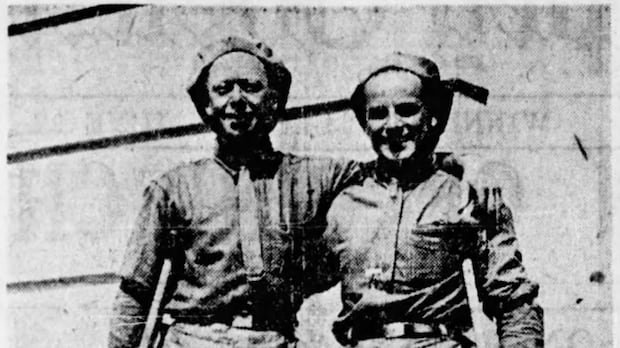

Two war veterans, George Hincks and Marshall McDougall, who lost a leg each during World War I, devised an extraordinary plan in 1923. Frustrated by societal underestimation due to their disabilities, they resolved to trek from Alberta to Ontario using crutches. This feat preceded Terry Fox’s iconic Marathon of Hope by almost six decades but remained largely obscure until historian Eric Story unearthed their story.
The duo’s daily 30-kilometer hike over nearly two months, using primitive prosthetic and crutch technology, impressed many. Lauren McDougall, Marshall’s great-grandniece, discovered this inspiring tale while delving into her family history. She described her great-granduncle as a jovial individual, highlighting the remarkable journey’s transformation from a friendly challenge to a significant statement on post-war support for amputees.
According to Story, the trek took place amidst Canada’s shift from agrarian to industrial society, where disabled individuals faced stigmatization as inefficient workers. Hincks and McDougall aimed to debunk these misconceptions by showcasing their resilience and determination during the arduous journey, which ended in Thunder Bay due to physical strain.
Apart from their pioneering trek, the veterans were early advocates for disability rights, predating the recognized movement by two decades. Their efforts challenged societal attitudes towards disabled individuals, laying the groundwork for future advocates. Both soldiers were affiliated with the Amputations Association of the Great War, a precursor to the War Amps charity supporting amputees across Canada.
Reflecting on her connection to this historical event, Lauren McDougall expressed pride and emphasized the ongoing relevance of challenging biases and mindsets a century later. The legacy of Hincks and McDougall continues to inspire awareness and resilience within the amputee community, echoing the motto, “It’s what’s left that counts,” upheld by the War Amps organization.