
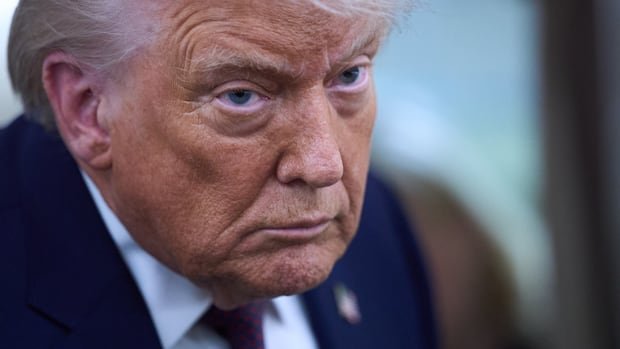

U.S. President Donald Trump has issued a stern warning to Canada, threatening a 100% tariff on all Canadian imports if Canada engages in a trade deal with China. Trump’s strong message follows Prime Minister Mark Carney’s recent speech at the World Economic Forum in Davos, Switzerland, which was seen as a response to U.S. actions.
In a social media post, Trump did not clarify the specifics of the “deal” mentioned. Canada recently concluded an agreement with China allowing 49,000 Chinese electric vehicles into the Canadian market at a reduced tariff of 6.1% in exchange for China lowering tariffs on Canadian canola.
Trump expressed his disapproval, stating, “If Governor Carney believes Canada will serve as a conduit for Chinese goods into the U.S., he is mistaken. China will severely impact Canada, leading to the destruction of their businesses and way of life.”
In a subsequent post, Trump emphasized, “There is no possibility of China taking control of Canada. This scenario will not materialize!”
Canada-U.S. Trade Minister Dominic LeBlanc clarified that there is no intention to pursue a free trade deal with China, emphasizing that the recent agreement resolved crucial tariff issues. LeBlanc highlighted the strong economic and security partnership between Canada and the U.S., focused on benefiting workers and businesses on both sides of the border.
Trump’s recent social media posts diverge from his initial response to the Canada-China agreement, where he initially viewed the deal positively. However, Commerce Secretary Howard Lutnick criticized Canada for complaining about U.S. treatment despite having a favorable trade deal.
The escalating tensions following Carney’s Davos speech have sparked reactions from various Canadian officials. Justice Minister Sean Fraser defended Carney against Trump’s remarks, emphasizing Carney’s leadership and messaging. Manitoba Premier Wab Kinew and B.C. Premier David Eby expressed support for Carney and Canada’s sovereignty amidst the trade dispute.
The situation continues to evolve as leaders navigate the complexities of international trade relations and geopolitical dynamics.