
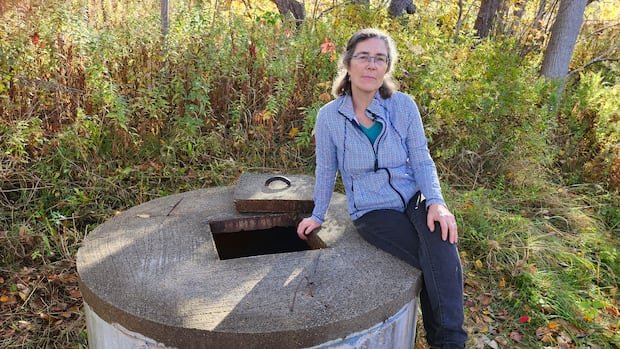

When a historic dug well on their property dried up after 200 years, Nancy Grove and Peter Gale faced a tough choice: endure an ongoing drought or invest around $20,000 in a drilled well. Like numerous residents in Nova Scotia, the couple from Baxters Harbour had to rely on water deliveries from the local community center and a neighbor with a drilled well who generously shared water through a hose.
Having lived in their Bay of Fundy home for over 30 years, Grove and Gale had witnessed the well serving the local church, school, and community members in the past. However, after monitoring the dry conditions for weeks, they realized the water table wouldn’t recover soon. With the approaching winter and the risk of freezing hoses, they decided to retire the old well and opted for a 91-meter-deep drilled well in early October.
Ian Spooner, a hydrogeology professor at Acadia University, emphasized the importance of assessing various factors, such as cost and property geology, before proceeding with well drilling during drought conditions. He highlighted the possibility of the drought persisting into winter, delaying water table recovery until spring.
Spooner recommended exploring alternative water sources like ponds, rivers, natural springs, water haulers, and community wells as interim solutions. Some municipalities were considering offering loans to property owners needing new wells. Understanding the geology of the land was crucial, as drilling in unsuitable areas could result in failed water discovery.
Referencing the Department of Natural Resources and Renewables, Spooner noted that sand and gravel deposits were excellent groundwater sources, while certain minerals could complicate drilling or contaminate water. He advised property owners to gather information before making decisions, as drilled wells offered more security during prolonged droughts.
Community engagement and professional consultations were encouraged to assess well depth, yield, and water quality. Spooner emphasized the temporary nature of extraordinary droughts, but stressed the importance of secure water access through drilled wells when necessary.