
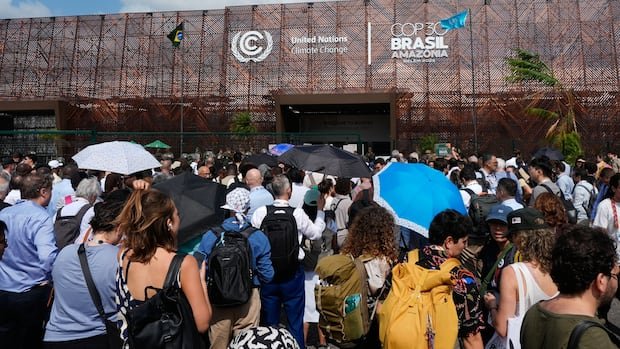

At the time Prime Minister Mark Carney revealed a new set of key projects for expedited approval, such as a fresh gas export facility, Canada’s delegates were engaged in bolstering the nation’s environmental standing on the global stage. This year at the COP30 UN climate summit in Belém, Brazil, Canadian representatives aimed to assure the world that despite recent policy reversals affecting key climate initiatives, the country remains dedicated to reducing emissions and achieving its long-term objectives.
Anna Kanduth, a senior policy analyst at Climate Analytics, expressed concerns over the rollback of emissions reductions due to weakening climate policies. The organization downgraded Canada’s climate plan to “highly insufficient” following the suspension of measures like the consumer carbon price and the electric vehicle sales mandate, while uncertainties loom over policies such as the oil and gas emissions cap.
Kanduth highlighted that the government’s inclination towards expanding fossil fuel production exacerbates the climate crisis. Evaluating countries based on their efforts to limit global warming to 1.5°C, Climate Analytics noted that while Canada shares poor ratings with other Western nations and major oil producers, it stands out for regressing in its climate commitments.
In a recent report, the Canadian Climate Institute admitted for the first time that Canada is unlikely to meet its 2030 emissions reduction target of 40-45%. Despite these challenges, Environment Minister Julie Dabrusin emphasized Canada’s determination to adhere to its ambitious goals.
Former Environment Minister Steven Guilbeault underscored Canada’s substantial investments in clean energy and climate adaptation over the past decade. However, he acknowledged the need for further actions to address climate change effectively.
Guilbeault expressed concerns about the lack of collaboration from the U.S. in climate efforts, attributing the challenges to the withdrawal from the Paris Agreement under the Trump administration. Meanwhile, global momentum towards clean energy remains strong, with countries like Europe setting ambitious emission reduction targets.
Despite criticism at COP30, Canada pledged $392 million towards international climate projects. Catherine Abreu, a member of Canada’s Net-Zero Advisory Body, noted the skepticism surrounding Canada’s commitment to climate action, especially against the backdrop of increased subsidies to the oil and gas sector.
While disappointment lingers over perceived inaction, Canada’s priorities at COP30 include accelerating LNG expansion, supporting nature conservation, and reducing methane emissions. The conference is scheduled to conclude on November 21.