
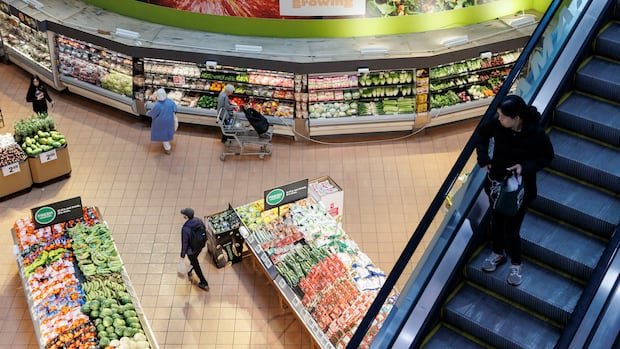

A potential boost in competition within Canada’s grocery sector could come from various strategies like enhancing food terminals, increasing domestic food production, and cracking down on anticompetitive practices. Prime Minister Mark Carney revealed a $3.2 billion food security plan that includes investing $1 billion in food terminals and hubs to facilitate independent grocers in purchasing goods at competitive rates. The initiative aims to expand the Ontario Food Terminal by the year’s end and commence construction on two new terminals by 2028, along with enlarging or establishing 10 food hubs.
Additionally, the strategy allocates $12.9 million annually to the Competition Bureau to detect and address anticompetitive behaviors in the industry. It also provides support for domestic food processing and greenhouse food production. Gary Sands, the Canadian Federation of Independent Grocers’ senior vice-president, welcomed these measures, expressing optimism about their potential to enhance affordability and competitiveness for independent grocers.
The Ontario Food Terminal, a key example, serves as a hub for small to medium-sized producers, offering a wide array of produce options for grocers. Industry experts like Sands and Christy McMullen, chair of the Ontario terminal’s board, believe that expanding such terminals and hubs could foster more competitive pricing and product variety. Munther Zeid, owner of Food Fare in Winnipeg, attested to the cost-effectiveness of sourcing produce from the Ontario terminal compared to local alternatives.
While the plan signals positive changes for the industry, executives like Craig Cavin from Country Grocer remain cautious about the immediate impact. The concentration of major grocers, including Loblaw, Sobeys, Metro, Walmart, and Costco, controlling 75% of sales, poses a challenge. Efforts by the Competition Bureau to address anticompetitive practices have garnered support but may face hurdles due to industry consolidation.
Overall, the strategy aims to address competition challenges in Canada’s grocery sector by focusing on the supply chain, potentially leading to improved availability and variety for consumers. While these measures are seen as beneficial for existing independent grocers, doubts linger about their capacity to significantly disrupt the dominance of major chains in the market.