
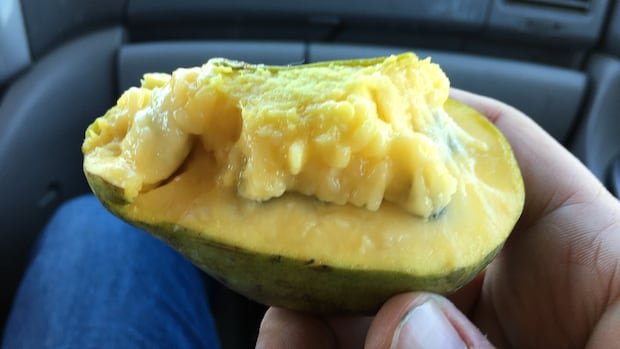


It may come as a surprise that the exotic-tasting pawpaw fruit thrives in Canada. Chef Tawnya Brant assures that getting a taste of this fruit is a delightful experience.
Describing its flavor, Brant, the proprietor of Yawékon Foods and host of APTN’s One Dish One Spoon, likens pawpaw to a blend of banana, mango, and pineapple, boasting a custardy consistency that turns caramel-like upon ripening.
“Imagine the essence of the tropics. If that had a flavor or aroma of its own, that would probably encapsulate the essence of a pawpaw,” Brant shared with The Current‘s Matt Galloway.
Pawpaws have thrived in North America for centuries, with a historical presence from Florida to Missouri and southern Ontario. Originally cultivated by Indigenous communities, these fruits faced setbacks due to deforestation for agricultural purposes. However, some pawpaw trees still flourish in the wild and in select orchards in regions of southern Ontario, B.C., and Quebec, yielding fruits in autumn.
The limited awareness of pawpaws can be attributed to their short shelf life post-harvest, which leads to rapid browning. Additionally, their delicate nature makes large-scale harvesting and commercial distribution challenging.

Exploring wild pawpaws in a concealed location near London, Ont., with forager and ecologist Mathis Natvik.
Brant’s first encounter with pawpaws occurred approximately ten years ago when a friend brought some to her late mother’s garden. She had previously heard about the fruit and the historical transportation of pawpaw trees up the eastern seaboard by the Haudenosaunee over centuries due to their fond