
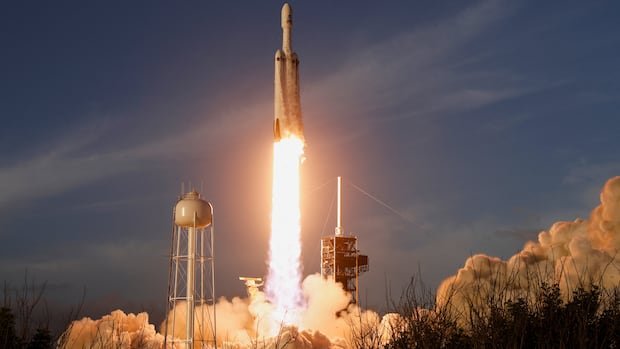

NASA has embarked on a new mission to explore key mysteries in astrophysics and cosmology by deploying the Nancy Grace Roman Space Telescope, the latest flagship astronomical observatory. The telescope, repurposed from a spy satellite, was launched from NASA’s Kennedy Space Center via a SpaceX Falcon Heavy rocket. It is set to operate for at least five years, with the potential for a five-year extension.
The primary goal of the Nancy Grace Roman Space Telescope is to delve into enigmatic cosmic phenomena such as dark energy, dark matter, gravitational effects on a large scale, and the discovery of exoplanets beyond our solar system. Originating from a former spy satellite program, the telescope was repurposed by NASA after being donated by the National Reconnaissance Office in 2012.
Named after NASA’s first chief astronomer, the telescope will be positioned at Lagrange Point 2, approximately 1.6 million kilometers from Earth. Following its launch, mission scientists will spend the next 90 days calibrating the telescope and preparing for its scientific operations. The telescope is anticipated to transmit its initial high-resolution images before the upcoming winter holidays.
The NASA administrator expressed confidence that the Roman Space Telescope will attain the same prominence as other renowned orbiting observatories like the James Webb Space Telescope and the Hubble Space Telescope. While the Hubble Space Telescope delves deeply into the universe with high sensitivity, Roman will provide wide-angle views of the cosmos at a faster pace.
By scrutinizing dark energy and dark matter, the Roman telescope aims to construct the most comprehensive 3D map of the universe to date, covering over two billion galaxies in its primary survey that will span more than a year. The telescope’s exploration is expected to shed light on the acceleration of the universe’s expansion since the Big Bang event around 13.8 billion years ago.
In addition to its cosmic investigations, the Roman Space Telescope will undertake an extensive search for exoplanets, potentially revealing thousands of new planets and offering insights into planetary systems resembling our own.