
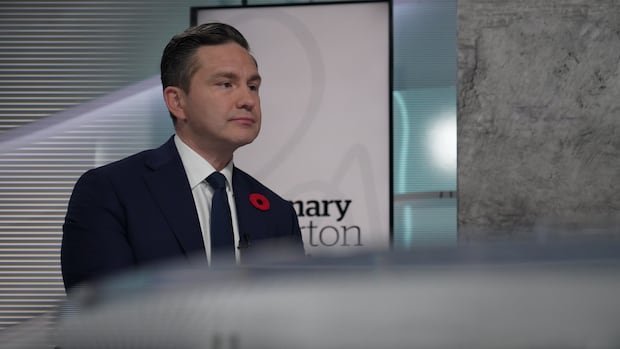

Conservative Leader Pierre Poilievre has stated that if he were to win the election, he would utilize the notwithstanding clause to reverse the recent Supreme Court ruling that invalidated mandatory minimum sentences for possessing or accessing child pornography. The ruling, decided with a 5-4 split among the judges, has sparked criticism from various provincial and federal authorities.
In an interview with CBC News, Poilievre expressed his disagreement with the ruling, emphasizing his intention to challenge it using the notwithstanding clause. He asserted that the decision was misguided and vowed to introduce mandatory prison terms for individuals found guilty of possessing child pornography, ensuring severe punishment for such offenders.
The notwithstanding clause, also known as Section 33 of the Charter, permits provincial or federal legislation to override specific Charter rights for a designated period, typically five years. The timing of the next federal election remains uncertain, following the recent election in April, where Prime Minister Mark Carney’s Liberals formed a minority government, potentially facing challenges based on upcoming budget votes.
The Supreme Court was called upon to address an appeal from Quebec involving two separate cases related to child pornography offenses. In both instances, the defendants pleaded guilty to possessing numerous images of child abuse, with one case involving victims as young as three years old. The defendants contested the constitutionality of the mandatory minimum sentences, arguing that they could lead to disproportionately harsh penalties.
The key issue before the Supreme Court revolved around whether the one-year imprisonment term outlined in the Criminal Code for child pornography offenses violated the Charter of Rights and Freedoms, particularly concerning cruel and unusual punishment. The majority opinion, articulated by Justice Mary Moreau, highlighted the diverse circumstances surrounding convictions for child pornography possession or access.
Poilievre criticized the Supreme Court for focusing on hypothetical scenarios, advocating for harsher sentences for offenders. He emphasized the need for tougher penalties, especially for individuals involved in such heinous crimes against children.
Dissenting voices, including Justices Richard Wagner and Suzanne Côté, expressed their disagreement with the majority decision, emphasizing the importance of consistent and severe sentencing for offenders convicted of sexual crimes against minors. Various Conservative leaders, including Ontario Premier Doug Ford, Alberta Premier Danielle Smith, and Saskatchewan Premier Scott Moe, condemned the ruling and called for the use of the notwithstanding clause to address the issue.
The decision to strike down the mandatory minimum sentences for child pornography offenses is part of a broader trend where the Supreme Court has invalidated similar sentencing provisions. Moreau underscored that while mandatory minimums may not inherently contravene the Charter, they are susceptible to constitutional challenges when they lead to disproportionately severe punishments for certain offenders.
The Canadian Centre for Child Protection, acting as an intervenor in the case, expressed support for the decision, citing the prevalence of child sexual abuse materials and emphasizing the harm inflicted on victims and communities. The organization highlighted the evolving threat posed by AI technology in the dissemination of such illicit materials.
As government officials review the implications of the ruling, the debate over the appropriate penalties for child abusers continues, with a focus on ensuring the toughest legal consequences for such reprehensible crimes.