
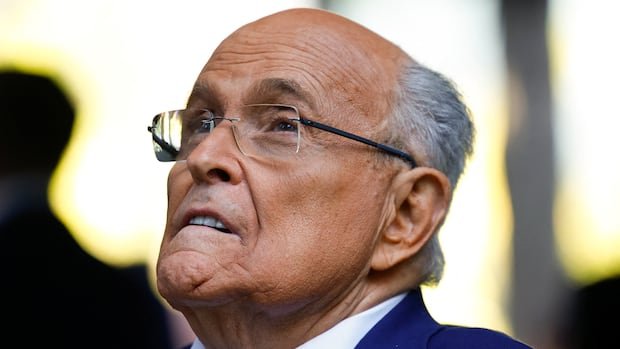

U.S. President Donald Trump has granted pardons to his former personal attorney Rudy Giuliani, ex-chief of staff Mark Meadows, and several others who were implicated in supporting efforts to challenge the outcome of the 2020 election, as confirmed by a Justice Department official. Ed Martin, the government’s pardon attorney, shared a signed proclamation of the pardons on social media, emphasizing their “full, complete, and unconditional” nature. The pardoned individuals, including close allies of Trump, such as conservative attorneys Sidney Powell and John Eastman, were listed in the document released by Martin.
The pardons extended to individuals like Sidney Powell, who propagated unfounded election conspiracy theories, John Eastman, who advocated for a plan to maintain Trump in office, and Jeffrey Clark, a former Justice Department official who actively supported Trump’s endeavors to dispute his election defeat. Additionally, the list included Republicans who posed as fake electors for Trump and faced state charges for submitting fraudulent certificates suggesting they were legitimate electors despite Biden’s victory in those states. Notably, the proclamation explicitly stated that the pardon did not cover Trump himself.
Although the pardons exclusively addressed federal crimes, and none of the named Trump associates faced federal charges related to the 2020 election, the action highlights Trump’s persistent attempts to revise the narrative of the election he lost to Democrat Joe Biden. This move follows a broad pardon initiative for numerous Trump supporters involved in the January 6, 2021, riot at the U.S. Capitol, including those convicted of assaulting law enforcement officers.
The pardon characterized the prosecution of Trump’s allies as a “serious national injustice inflicted on the American people” and emphasized that the pardons aimed to advance the process of national reconciliation. Individuals like Giuliani and others have maintained their innocence, contending that their actions merely sought to challenge what they perceived as a fraudulent election. The White House press secretary, Karoline Leavitt, asserted in a statement that these individuals faced persecution from the Biden administration for contesting an election, which is fundamental to democracy.
Despite claims of mistreatment, those who received pardons were not subjected to prosecution by the Biden administration but faced charges solely from state prosecutors operating independently from the Justice Department. Trump himself faced felony charges for allegedly attempting to overturn the 2020 election results, but the case initiated by Justice Department special counsel Jack Smith was dropped in November following Trump’s win over Democrat Kamala Harris, in adherence to the department’s policy against indicting sitting presidents. While Giuliani, Powell, Eastman, and Clark were implicated as co-conspirators in the federal case against Trump, they were not indicted for federal offenses.
Giuliani, Meadows, and others mentioned in the proclamation had been indicted by prosecutors in several states, including Georgia, Arizona, Michigan, Nevada, and Wisconsin, regarding the 2020 election, but these cases have encountered repeated obstacles or have been dismissed. For instance, a judge dismissed the Michigan case against 15 Republicans accused of seeking to falsely certify Trump as the election winner in that pivotal state in September.
Giuliani, the former mayor of New York City, emerged as a vocal advocate of Trump’s unproven allegations of widespread voter fraud after the 2020 election. Subsequently, Giuliani faced disbarment in Washington, D.C., and New York due to his promotion of Trump’s baseless election assertions and lost a $148 million defamation lawsuit brought by two former Georgia election workers affected by the conspiracy theories he endorsed.