
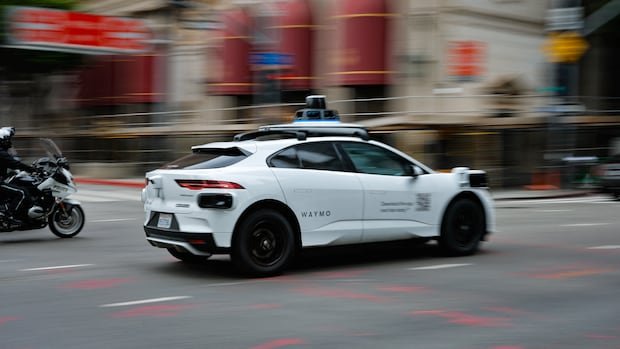

Waymo’s autonomous vehicles were found to be involved in 68% fewer accidents than human drivers in a three-year span across four cities in the United States, as per recent data from the U.S. Insurance Institute for Highway Safety. The study revealed 89 Waymo-related crashes in San Francisco, Phoenix, Los Angeles, and Austin from 2021 to 2024. During the same period and in the same locations, there were 901,525 police-reported crashes caused by humans, excluding incidents on interstates and highways.
Steven Waslander, the director of the University of Toronto Robotics Institute, expressed excitement about seeing long-awaited technology like autonomous vehicles being effectively used in real-world settings. Of the 89 Waymo-involved accidents, 72% occurred while the vehicle was operating without a human driver, with approximately half of them having passengers on board.
The research highlighted that Waymo vehicles traveled approximately 80 million kilometers autonomously, whereas human drivers covered 355 billion kilometers in the same regions during the three-year timeframe. The study indicated that Waymo’s crash rate per million vehicle miles traveled was 1.28, significantly lower than the human driver rate of 4.06.
The study, based on data from law enforcement, Waymo, and federal databases, emphasized the positive impact of autonomous vehicles on road safety. Waymo, operational in 11 U.S. states, is looking to expand its services to the United Kingdom and Japan while also exploring opportunities in Canada.
Eric Teoh, from the Insurance Institute for Highway Safety, noted the promising future of driverless vehicles, particularly with Waymo’s vehicles being involved in fewer and less severe crashes compared to human-driven vehicles. Despite the positive outlook, concerns were raised about the transparency of data reporting by Waymo and the need for improved accessibility to datasets for government monitoring.
An obstacle for Waymo’s expansion into Canada is the regulatory framework, as certain provinces like British Columbia have restrictions on the type of autonomous vehicles allowed. Moreover, the unique climate conditions in Canada, especially during winters, pose challenges for autonomous driving technology.
While autonomous vehicles demonstrate lower collision rates than human drivers, instances of technical challenges have been highlighted in social media posts, raising doubts about the reliability of such data. Experts acknowledge that autonomous vehicles are still in a learning phase and may not fully replace traditional driving experiences anytime soon.
Looking ahead, the vision for autonomous vehicles includes the potential for widespread adoption by 2030, where urban residents could summon driverless ride-hail vehicles using mobile apps. However, the transition to a fully autonomous transportation system is expected to be gradual rather than immediate.